Natto Benefits: The Sticky Superfood Rich in Vitamin K2 (Plus Easy Recipe)

Traditional Japanese natto served over white rice with green onions in a blue bowl with pretty chopsticks.
In this post, I’m sharing the incredible health benefits of natto, why it’s one of the most powerful foods you can add to a plant-based diet, and exactly how to make it at home.
Yes… it’s sticky.
Yes… it’s a little stinky.
But it may just be one of the most underrated superfoods in the world.
How I Went from “Absolutely Not” to Eating Natto Daily
Discovering natto felt like stumbling upon one of the world’s best-kept health secrets.
I first heard about it years ago while diving deep into nutrition and healing through food. At the time, I had already transformed my diet and felt amazing… so adding something described as “sticky fermented soybeans” didn’t exactly excite me.
Honestly? It looked terrible.
But the science kept coming up again and again.
Eventually, I had to ask myself:
Am I willing to ignore something this powerful just because it looks… questionable?
Why Natto Is So Powerful (The Science You Can’t Ignore)
Natto is a traditional Japanese fermented food made from soybeans. What makes it so unique is the specific bacteria used in fermentation:
Bacillus subtilis.
This is what gives natto its signature texture—and its incredible health benefits.
Natto is the richest known plant-based source of vitamin K2 (MK-7).
Why Vitamin K2 Matters
Vitamin K2 plays a critical role in calcium metabolism.
It helps:
Move calcium into your bones and teeth
Keep calcium out of your arteries
Support both heart health and bone strength
Think of it as the traffic director for calcium in your body.
Where Do You Get Vitamin K2 on a Plant-Based Diet?
Most plant foods contain vitamin K1, which the body can convert into small amounts of K2.
However…
Natto is considered the richest and most reliable plant-based source of preformed vitamin K2 (MK-7). Think of it as the traffic director for calcium in your body.
Fermented foods like sauerkraut and kimchi may contain small amounts depending on how they’re made, but they are not consistent or reliable sources.
Some animal-based foods—like egg yolks, aged cheeses, and organ meats—contain vitamin K2 (primarily MK-4). However, as someone who follows a whole-food, plant-based lifestyle, I do not include those foods in my diet.
10 Incredible Health Benefits of Natto
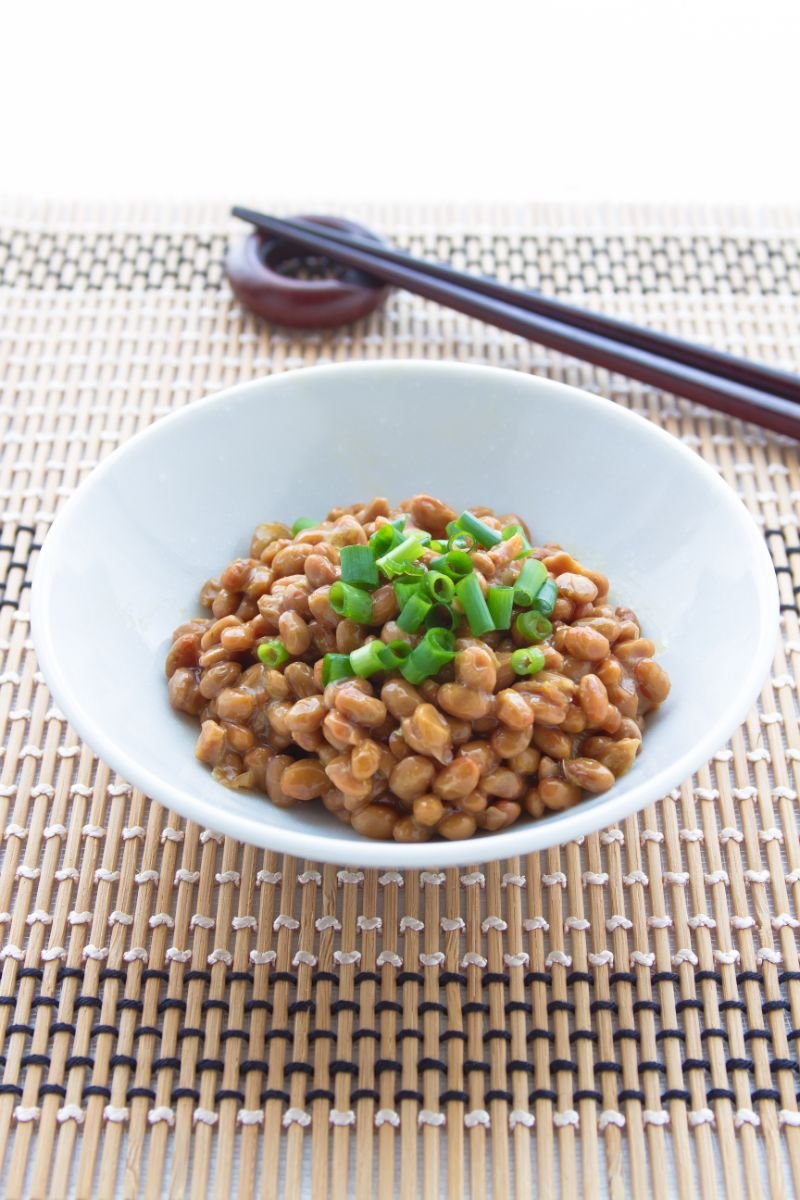
Homemade natto topped with fresh green onions in a white bowl on a bamboo placemat.
1. Supports Strong Bones
Vitamin K2 activates osteocalcin, helping bind calcium to bones and improving bone density.
2. Promotes Heart Health
K2 helps prevent calcium buildup in arteries, supporting cardiovascular health.
3. Improves Gut Health
As a fermented food, natto provides beneficial bacteria that support the microbiome.
4. Strengthens the Immune System
A healthy gut plays a key role in immune function.
5. May Support Better Sleep
Natto contains compounds that support the production of serotonin and melatonin.
6. Helps Reduce Inflammation
Rich in antioxidants and anti-inflammatory compounds.
7. Boosts Energy Levels
Packed with B vitamins, iron, and plant protein.
8. Supports Hormonal Balance
Contains isoflavones that may help regulate estrogen levels.
9. May Help Protect Against Disease
Studied for its role in supporting overall cellular health.
10. Supports the Body’s Natural Detoxification Processes
Fermented foods may help support healthy digestion and overall metabolic function
How to Make Natto at Home (Instant Pot Method)
Making natto at home is surprisingly simple—and incredibly cost-effective. And quite honestly, I feel like the taste and smell are SO much more appealing than the frozen stuff you get in the store. I’m not sure I would be such a fan if that were my only option, as store-bought natto has an ammonia smell that just isn't present in freshly made natto. And although this process may sound complicated, once you do it once, you realize how easy it really is. We make a big batch every other Friday, and it easily lasts in the fridge for 2 weeks.
What you’ll need:
Organic non-GMO soybeans. This is extremely important, as non-organic soybeans are heavily sprayed with pesticides and are not healthy.
Instant Pot
Step-by-step:
Rinse soybeans thoroughly. For beginners, 1 cup of dried soybeans is a good place to start; it will yield about 2.5-3 cups cooked. Adjust accordingly to how much you think you want to consume.
Soak for 8–10 hours, rinse again
Add to the Instant Pot and cover with water. Cook in the Instant Pot using the bean setting
Sterilize utensils and containers to give the natto culture the best chance to thrive (we do this by resting our metal colander and the spoon we are going to use to stir the beans in a large soup pot. We add water to the soup pot, bring it to a boil, and cover and steam for 10-15 minutes.) I’ve also seen people just pour boiling water over the items they are going to use; it’s up to you.
Use the sterilized colander to drain the soybeans and let them cool completely
Add beans back into the Instant Pot in layers, adding a sprinkle of the natto starter after each layer and mixing well. What we do: The starter comes with a teeny tiny spoon; we use a heaping spoonful between each layer. We add more than the recommended amount based on experimentation over the last 2 years. For ½ pound beans, add about 3 heaping spoonfuls between 3 layers, mixing well after each layer.
Cover with BPA-free plastic wrap and allow airflow (poke small holes with a toothpick if covering). The plastic helps keep the natto from drying out. However, I dislike using plastic for anything and am beginning to experiment with other options, and will update as I learn!
Incubate using the yogurt setting, or at 100 degrees for 24-36 hours
Stir well after fermenting (the stringier, the better!)
Store in the refrigerator for up to 1–2 weeks
How Much Natto Should You Eat?
We typically eat about ½ to 1 cup daily. However, ¼ cup is more than enough for most people looking to increase their K2 intake.
What Does Natto Taste Like?
Let’s be honest… this is where most people hesitate, and in my experience, store-bought is much less appealing to me. It has a strong ammonia smell, and I didn’t enjoy that. Luckily, we didn’t give up on it after that experience and decided to make our own. If you have tried frozen natto and hated it, homemade natto may completely change your opinion. The taste and smell are drastically different and quite pleasant!
Homemade Natto has:
an earthy, slightly sweet smell
a sticky, stringy texture
a savory, slightly nutty flavor
It grows on you surprisingly fast. I actually look forward to eating it now.
And honestly, even more so once you start feeling the benefits. People who eat natto regularly often describe subtle but meaningful changes over time: improved digestion, better satiety, steady energy, and an overall sense of nourishment. Rather than being a miracle food, natto seems to work best as part of a consistent whole-food lifestyle.
Ways to eat Natto:

Sticky fermented soybeans (natto) served over rice, with a side of fresh veggies and a bowl of tofu miso soup.
The good news? Natto is usually eaten in small amounts and combines beautifully with other savory foods.
The traditional way Japanese people eat natto is over hot rice topped with green onions, mixed with tamari or soy sauce, and sometimes a little mustard. It’s delicious like this! I eat it much more simply on a daily basis with just a little Bragg’s Aminos sprinkled on it. The options are endless, though! I have mixed it with kimchi, had it with an avocado, put it over quinoa with some hot sauce, added it to a salad, etc!
Final Thoughts: Is Natto Worth It?
If you’re following a plant-based lifestyle and want to optimize your health at a deeper level, natto is one of those foods that’s worth getting past the initial hesitation. Plus, it is a fantastic source of plant protein with 1 cup packing a whopping 30-35 grams of high-quality protein! Not to mention the fiber, probiotics, and vitamin K2! Love this!
It’s not trendy.
It may be out of your comfort zone.
But it’s incredibly powerful.
And sometimes, the most healing foods are the ones we almost overlook.
Let me know if you try this recipe and if you like it!