How Your Thoughts Affect Your Health, Healing and Daily Habits
Our thoughts are doing far more than simply narrating our lives.
The way we think can influence how we experience stress, the choices we make, the habits we repeat, and even what happens physiologically inside the body. I find that fascinating—because it means the way we think about caring for ourselves may be part of caring for ourselves.
I was reminded of this recently in the most ordinary little moment.
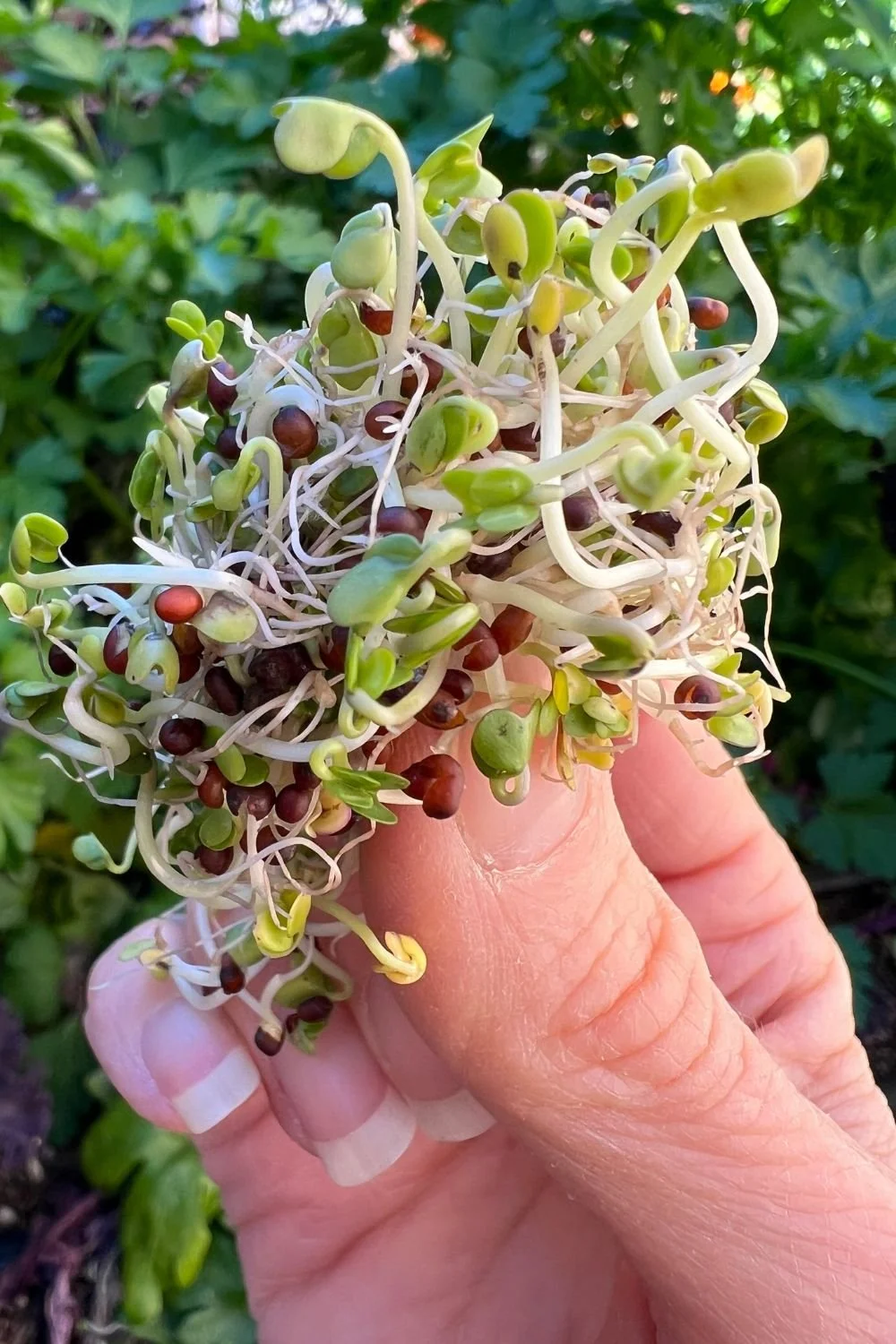
I grabbed a pinch of freshly grown broccoli sprouts from the jar in my kitchen and chewed them slowly. I knew that crushing and chewing broccoli sprouts helps bring together the compounds needed to form sulforaphane—the remarkable plant compound that makes these tiny sprouts so interesting.
And I remember thinking: How incredible that I get to know this.
That thought stayed with me.
Many of us already know what supports our health. We understand the importance of sleep, movement, sunlight, and nourishing food. But where people often get stuck isn’t knowledge — it’s mindset. The quiet thoughts running in the background can either support change or make every healthy choice feel heavy.
I was first introduced to this idea as a teenager. I remember hearing the phrase “stinkin thinkin” in a lecture when I was 19. We were encouraged to read books like As a Man Thinketh and explore how our thoughts shape our lives. Years later, neuroscience would confirm what many wise teachers had long suggested: our brains change based on what we repeatedly think.
Your Brain Is Always Practicing Something

Our brains are designed to adapt. Repeated thoughts strengthen neural pathways, making certain ways of thinking more automatic over time. This process, often called neuroplasticity, means that our inner dialogue is not harmless background noise — it is training.
If we repeatedly think:
“This is too hard.”
“I always mess this up.”
“Everyone else can eat normally but me.”
Our brains get better at reinforcing those beliefs.
But the opposite is also true.
When we practice thoughts rooted in agency, gratitude, and possibility, we create pathways that support follow-through instead of resistance. Our nervous system shifts from pressure to participation.
Your brain is always practicing something. The question is what.
A Small Shift in Perspective Can Change Everything

The path doesn’t change. The direction you choose does.
A powerful example often shared in the health space is the shift from:
“I have to eat this because I’m sick.”
to
“I get to nourish my body that is designed to heal.”
The behavior is identical. The biology is not.
Language that feels like punishment increases stress and decreases motivation. Language that emphasizes choice and care activates reward pathways and builds consistency.
Reframing does not mean pretending things are easy. It means choosing a perspective that supports forward movement.
Ancient Wisdom Meets Modern Science

Long before brain scans existed, Scripture emphasized the importance of our thought life — renewing the mind, focusing on what is good, true, and worthy of attention. Today, neuroscience is measuring how attention shapes emotional regulation, habit formation, and even physical health behaviors.
Where we place our focus matters. Not because positive thinking magically removes difficulty, but because attention influences perception, behavior, and persistence.
Gratitude, hope, and intention are not personality traits. They are practices.
Identity Changes Everything

One of the most powerful shifts happens when we move from behavior language to identity language.
Behavior:
“I’m trying to eat healthy.”
Identity:
“I’m someone who cares for my body.”
Identity reduces decision fatigue. It changes the question from “Should I do this?” to “Is this aligned with who I am becoming?”
Small choices then reinforce that identity, creating momentum that feels sustainable instead of exhausting.
Small Shifts Add Up

You don’t need perfect thinking. You need practiced thinking.
Here are a few simple reframes that can make healthy habits feel more supportive:
Try reframing your thoughts with the ideas listed below…
“I can’t eat that.” → “I’m choosing something that helps me feel better.”
“This is restrictive.” → “This is supportive.”
“I always mess up.” → “I’m learning.”
“This is overwhelming.” → “I only need the next step.”
“I have to do this.” → “I get to care for myself.”
These shifts may seem small, but repeated over time they change emotional tone, consistency, and confidence.
Healing Is Not Just Physical

Nutrition matters. Movement matters. Sleep matters. But the environment we create inside our minds matters too.
The goal isn’t constant positivity. It’s awareness. Noticing the story you’re telling yourself and gently choosing one that supports growth instead of shame.
That morning with the broccoli sprouts reminded me that health is not just about what we eat — it’s about how we relate to what we eat, how we see our bodies, and whether our inner voice sounds like pressure or partnership.
Our minds are incredibly powerful. And the beautiful truth is that change rarely begins with something dramatic. It begins with a small shift, practiced often.
Tiny rewiring. Daily.