How to Build a Nutrient-Dense Salad with Microgreens, Sprouts, Herbs, and Edible Flowers
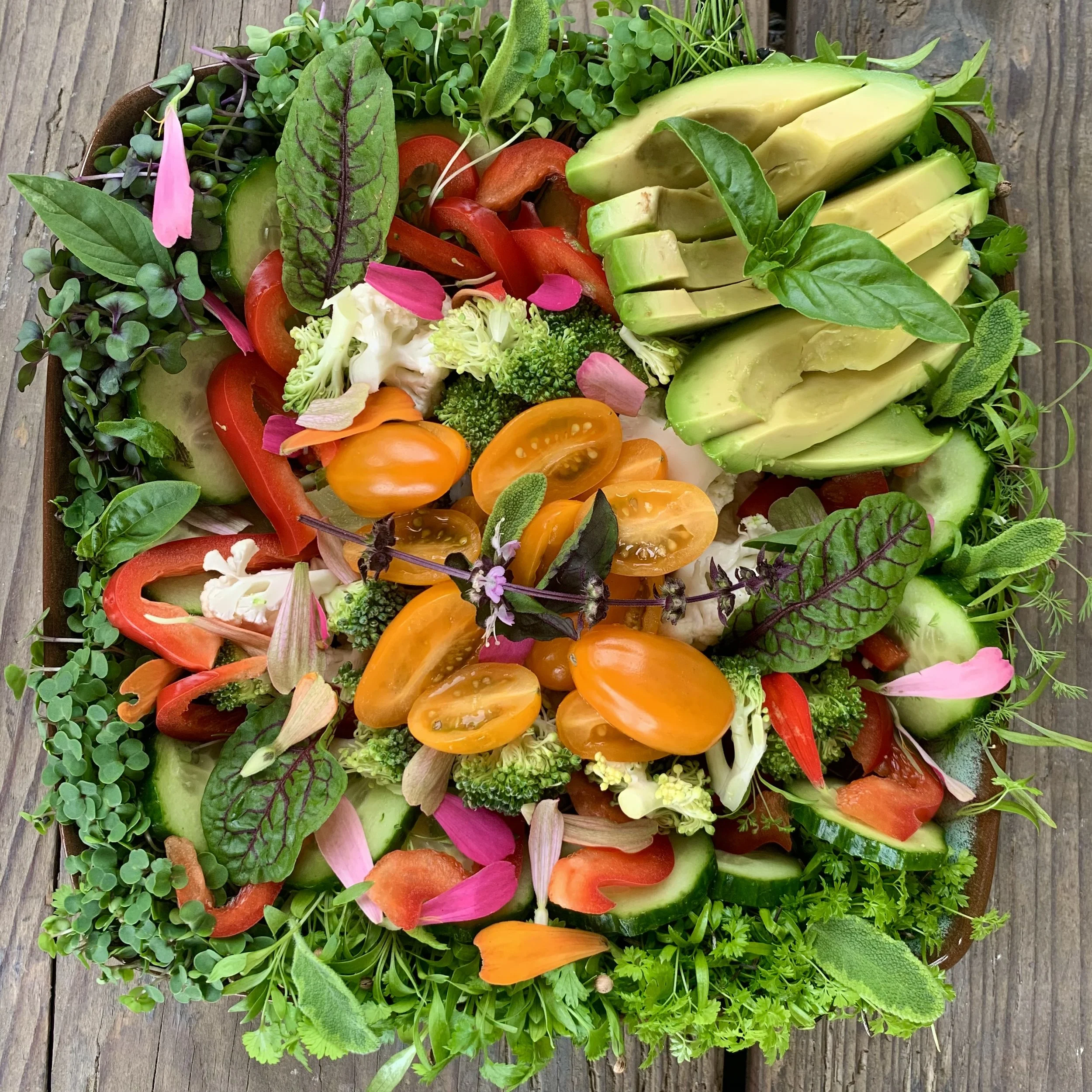
Rainbow salad loaded with micro-greens, flower petals, and colorful veggies.
I’ve loved salad for as long as I can remember.
When my sister and I were kids — she was thirteen, and I was eleven— she got “stuck” helping my mom prepare the chicken. I, on the other hand, happily took charge of the salad. Even back then, I loved making and eating salads.
I remember carefully choosing the greens, arranging the vegetables, and making sure everything looked just right. My mom watched for a moment and then smiled and said,
“You’re the best little salad maker in the world.”
She used to say something else too — something that has stayed with me my whole life:
“Everything tastes better in a pretty bowl.”
I took those words to heart.
Looking back now, I realize that was the beginning of what would become a lifelong love for nourishing food that feels joyful, beautiful, and abundant — not restrictive or dull. To this day, I still believe that how our food looks matters just as much as what’s in it.
Why Beautiful Food Matters
We eat with our eyes first — and that’s not vanity, it’s human nature.
Beautiful food slows us down. It invites us to savor. It helps us enjoy eating well instead of rushing through meals or feeling like we’re “doing something we should.”
I also believe — gently and wholeheartedly — that God made food colorful on purpose. Leaves, roots, fruits, herbs, and flowers were designed to nourish and delight. Healthy eating was never meant to feel like punishment.
A beautiful salad doesn’t need to be complicated. It just needs intention.
The Foundation: Greens That Feel Alive
Every beautiful salad starts with a generous base of greens.
I love combining textures:
Romaine for crunch
Butter lettuce for softness
Arugula for bite
Spring mix for variety
Micro-greens for abundant nutrients
Mixing greens creates interest before you’ve added anything else.
One simple tip: start with a bigger bowl than you think you need. I truly believe the bowl is part of the recipe — and yes, I have an armoire full of beautiful bowls just for salads. Everything really does taste better in a pretty bowl.
The Magic Layer: Microgreens & Sprouts
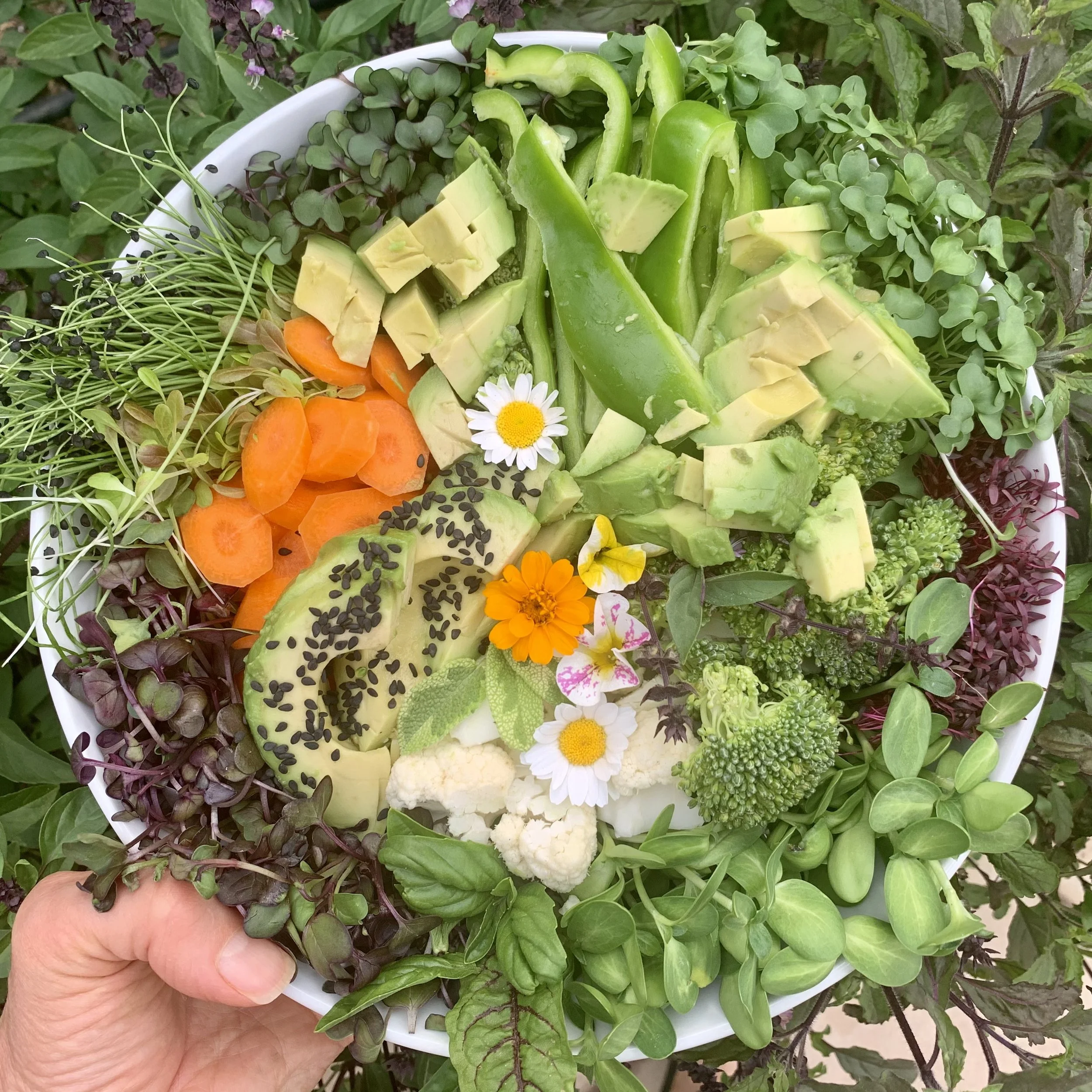
Fresh greens topped with seasonal vegetables, microgreens, herbs, avocado, and edible flowers for color, texture, and natural beauty.
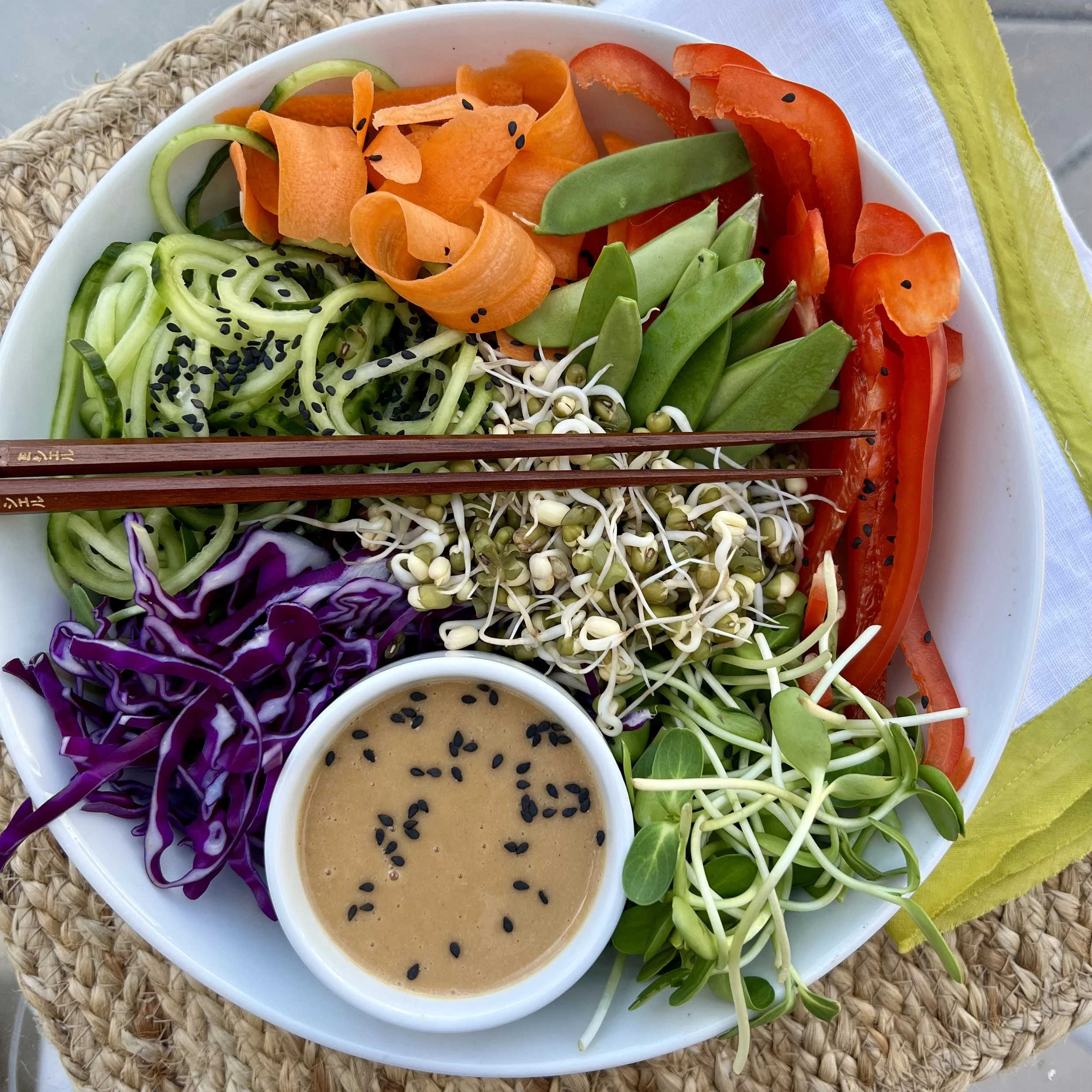
An Asian-inspired vegetable bowl with spiralized greens, crunchy vegetables, fresh mung bean sprouts, and a creamy sesame dressing.
If there’s one thing that instantly transforms a salad, it’s microgreens and sprouts.
They add freshness, texture, and a feeling of life. You don’t need much—just a small handful sprinkled on top can make even the simplest salad feel intentional and nourishing.
Sprouts and microgreens are one of my favorite ways to bring living foods into everyday meals without overthinking it.
Color Is Not Just Decoration — It’s Nourishment
One of my favorite ways to build a salad is to think in color, not rules.
🍅 Red.
🥕 Orange.
🌈 Yellow.
🥦 Green.
💜 Purple.
Each color brings something different — both visually and nutritionally. You don’t need every color at every meal. Variety over time is what matters.
Let the seasons guide you. Let your garden guide you. Let your eyes guide you.
If it looks beautiful, you’re usually on the right track.
Herbs: The Secret to Beautiful Salads
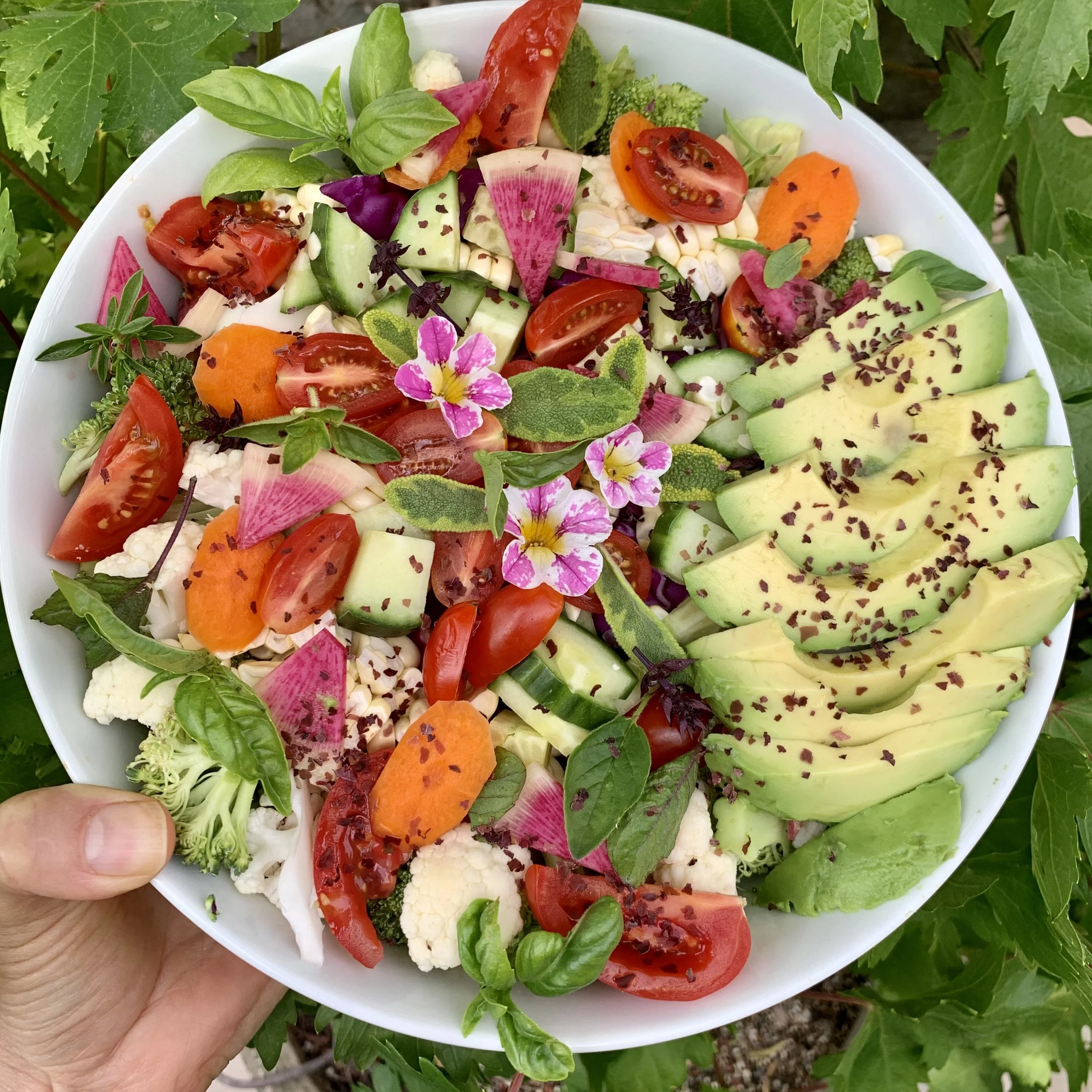
A vibrant salad layered with crisp vegetables, creamy avocado, fresh herbs, and colorful edible flowers-nourishment meant to delight all the senses.
Fresh herbs often make the difference between a good salad and a memorable one.
Basil, dill, cilantro, parsley, mint — even one or two can completely elevate a bowl. I love tearing herbs by hand instead of chopping them. They look more natural and feel gentler scattered through the salad.
Herbs don’t overpower. They brighten.
The Finishing Touch: Edible Flowers
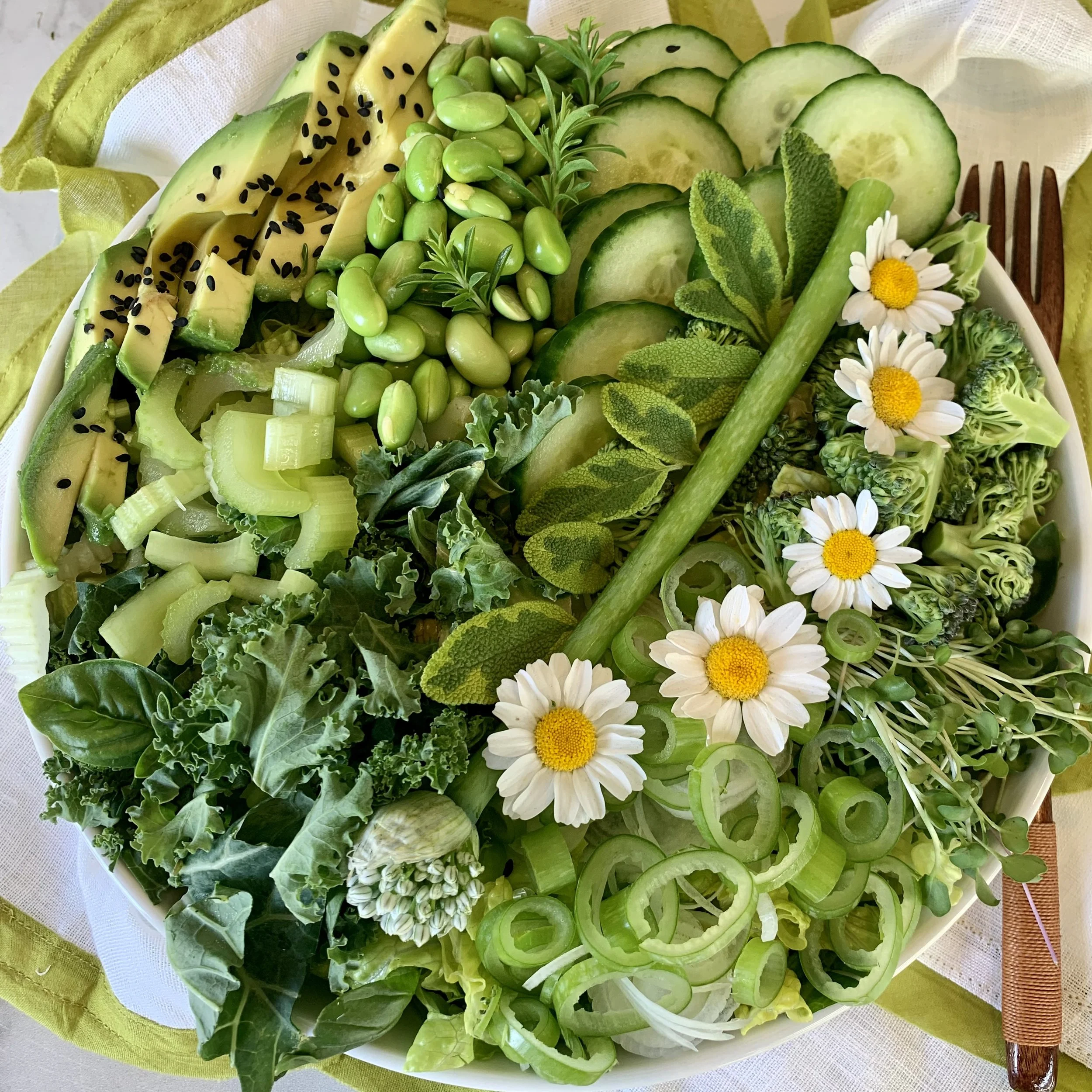
A simple bowl of greens, herbs, microgreens, and fresh garden blossoms-proof that nourishment can be beautiful.
Edible flowers are not essential — but they are magical.
A few petals can change the entire experience of a meal. They invite playfulness, beauty, and wonder. Even one or two flowers is enough.
Some of my favorite edible flowers to grow and use in salads include:
Nasturtiums
Calendula
Pansies and violas
Borage
Chive blossoms
Bachelor’s buttons
lavender
Edible flowers remind us that nourishment can be joyful. Food doesn’t have to be serious all the time.
(Always be sure flowers are organically grown and safe to eat before using.)
Building Abundance (Not Restriction)
I don’t believe in flat, sad salads.
Layer ingredients instead of mixing everything together. Add height. Add contrast. Let textures and colors show.
Seeds, nuts, a simple dressing, or a squeeze of citrus at the end can make the whole bowl feel complete.
This isn’t about perfection. It’s about creating something you actually want to eat.
My Signature Rainbow Salads
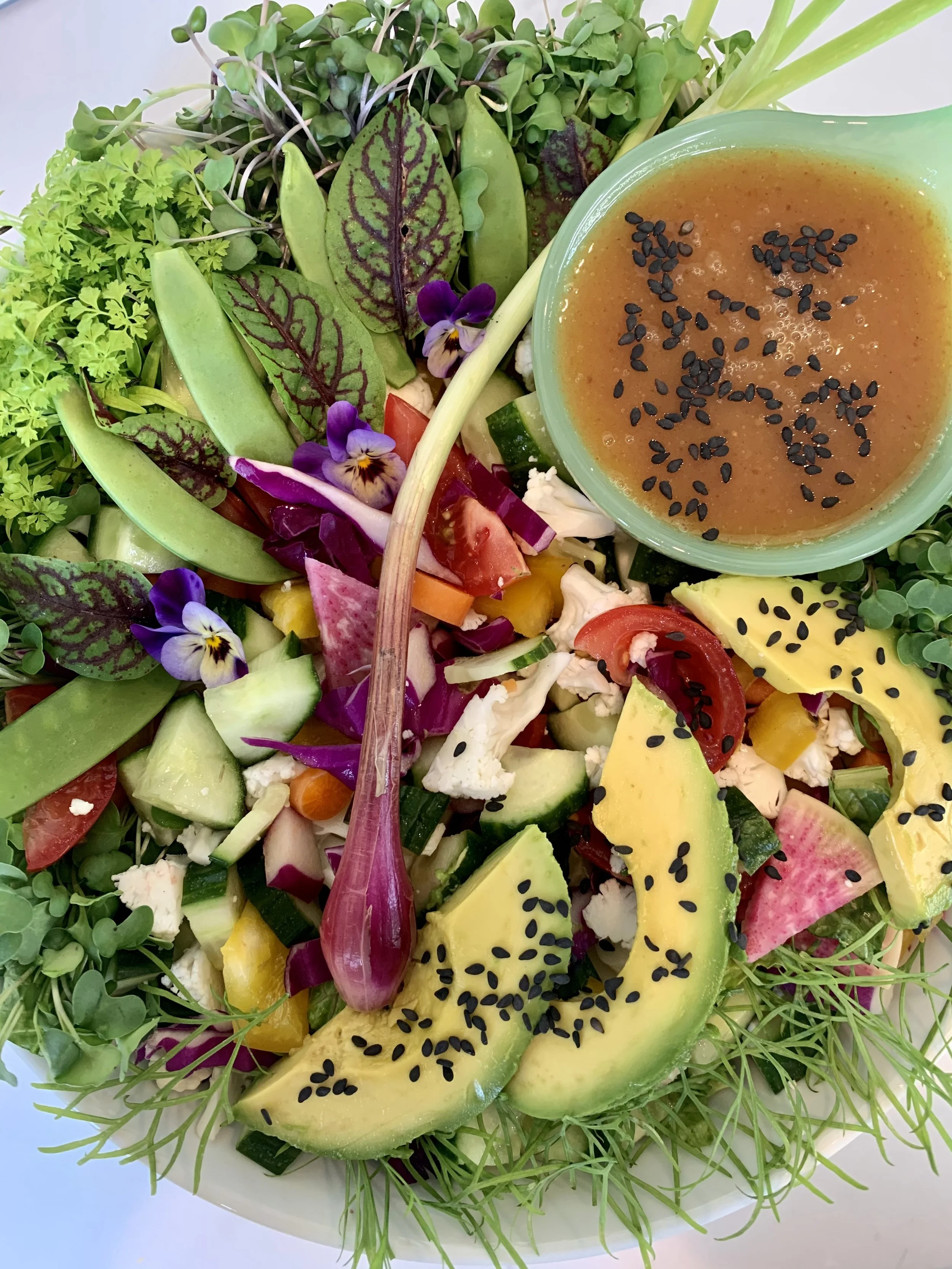
Vibrant rainbow colored salad with dill, red-veined sorrel, microgreens, avocado, and darling violas.
The salads I make change with the seasons, my garden, and my body’s needs — but they all share one thing in common: they feel abundant and alive.
Some are simple garden bowls.
Some overflow with micro-greens.
Some are topped with herbs and flowers just because it makes me smile.
Make Salads Beautiful and Creative, Have Fun!
Some people love cooking elaborate meals.
Some love baking.
I’ve always loved salads.
If you’re drawn to color, freshness, and living foods, lean into that. Let food be something you look forward to.
And yes — everything really does taste better in a pretty bowl.