How to Make Dr. Brooke Goldner’s Hyper-Nourishing Green Smoothie
I absolutely love green smoothies.
After more than a decade of drinking them, I still think there is something pretty incredible about taking a blender packed with leafy greens and cruciferous vegetables, adding ripe fruit and water, and turning it into something fresh and delicious that you can drink.
Some people discover Dr. Brooke Goldner’s Hyper-Nourishing smoothies and can’t wait to get started. Others arrive feeling more like, Okay...apparently I have to drink all these greens now!
If you’re in that second group, I hope I can change your mind a little.
One of the things I love most about this way of eating is its simplicity. Dark leafy greens and cruciferous vegetables are extraordinarily nutrient-dense foods, and a smoothie gives us an easy way to eat a surprisingly large amount of them along with fruit, hydration, and an omega-3 source.
Dr. Goldner’s official materials continue to emphasize leafy greens and cruciferous vegetables, flax and chia, water, and green smoothies as central pieces of her Hyper-Nourishment approach. Her website also offers her own smoothie tutorial and healing smoothie recipes.
Sometimes taking better care of our bodies can begin with a blender, a pile of plants, and a smoothie that actually tastes good.
And once you learn a few tricks, it gets much easier.
What Is a Hyper-Nourishing Smoothie?
Dr. Brooke Goldner is a physician and author who developed what she calls the Hyper-Nourishing Protocol. Her later Hyper-Nourishment work grew out of her own experience of dramatically changing her diet and recovering from lupus and lupus nephritis after years of serious illness and medical treatment.
Her approach emphasizes very large amounts of raw leafy greens and cruciferous vegetables, omega-3-rich foods, and hydration. If you’re new to her work, you can read my full guide to Dr. Brooke Goldner’s Hyper-Nourishing Protocol here.
A Hyper-Nourishing smoothie is one very convenient way to combine those foods.
And I want to make an important distinction from the beginning: Hyper-Nourishing for general health is much more flexible than following one of Dr. Brooke Goldner’s healing protocols.
Someone who simply wants to add more of these foods to an otherwise healthy diet may not use the same amounts or restrictions as someone following Goodbye Autoimmune Disease or another therapeutic protocol.
Throughout this article, I’ll point out those differences where they matter.
Dr. Brooke Goldner’s Basic Hyper-Nourishing Smoothie Formula
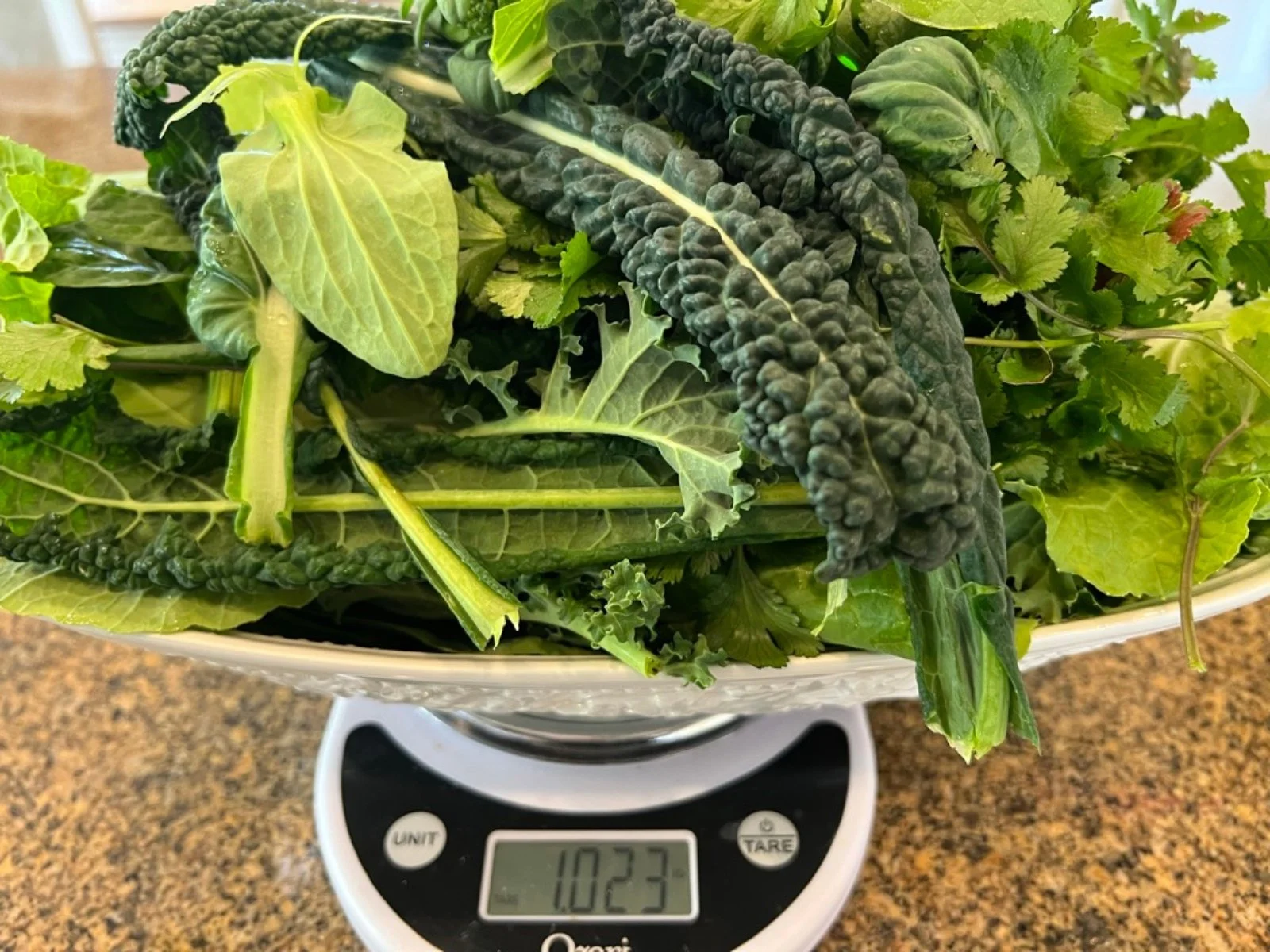
For a full smoothie intended to provide approximately one pound of your greens and/or cruciferous vegetables, this is the basic framework I use:
16 ounces dark leafy greens and/or cruciferous vegetables
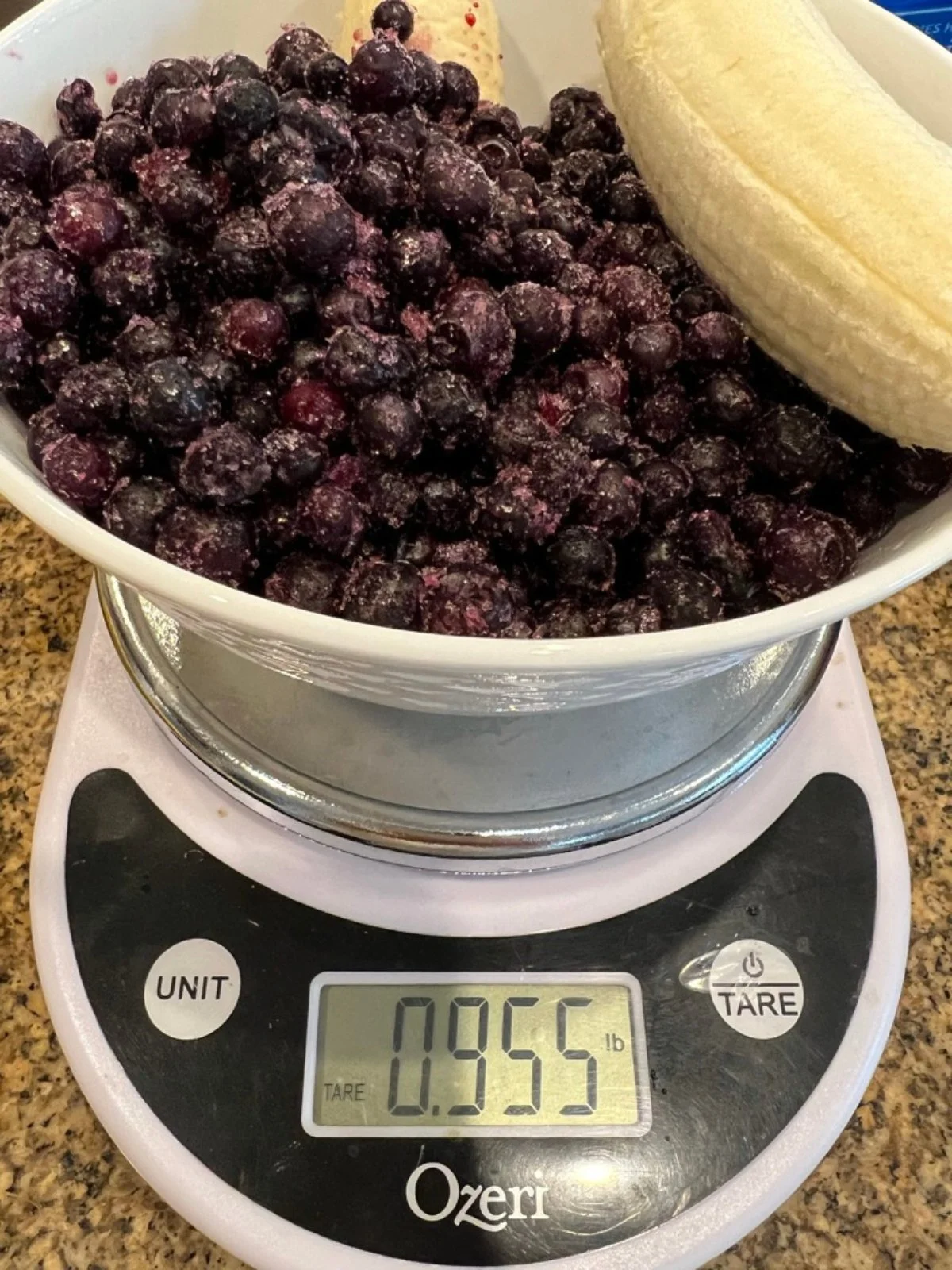
Up to approximately 16 ounces of fruit
About 30–40 ounces water
Flax and/or chia, with the amount depending on whether you are Hyper-Nourishing for general health or following a healing protocol like the Goodbye Lupus protocol or the Goodbye Autoimmune protocol
Optional flavor additions such as a small peeled lemon and fresh ginger
You do not have to consume your entire pound of vegetables in one smoothie. You can make half the recipe and eat the rest of your greens or cruciferous vegetables later. We’ll talk about that below.
First, Buy an Inexpensive Kitchen Scale
If I could recommend one little tool before you begin, it would be a digital kitchen scale.
Even after Hyper-Nourishing for over 3 years, I still use my scale every morning!
I honestly think it takes a lot of confusion out of this.
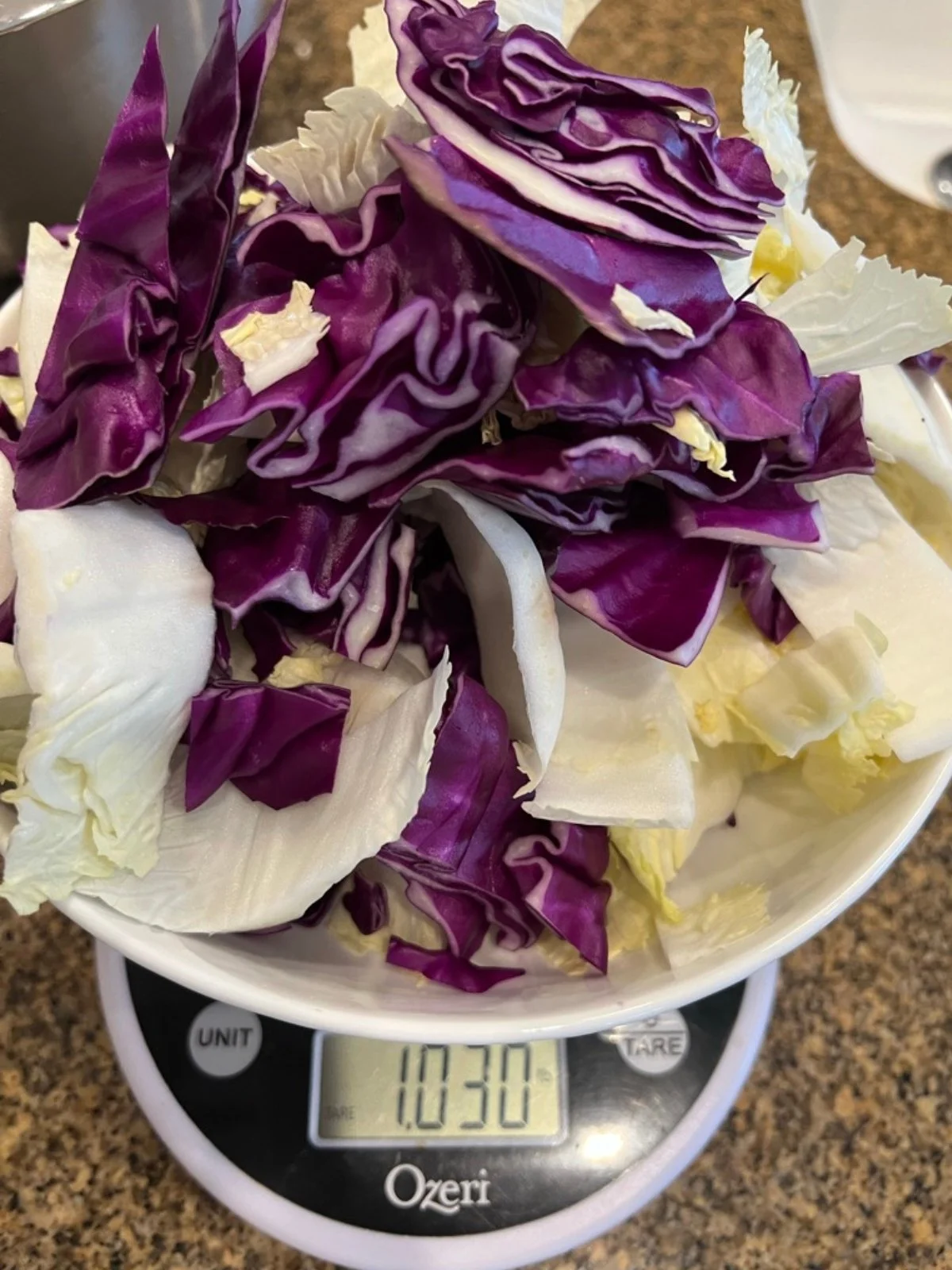
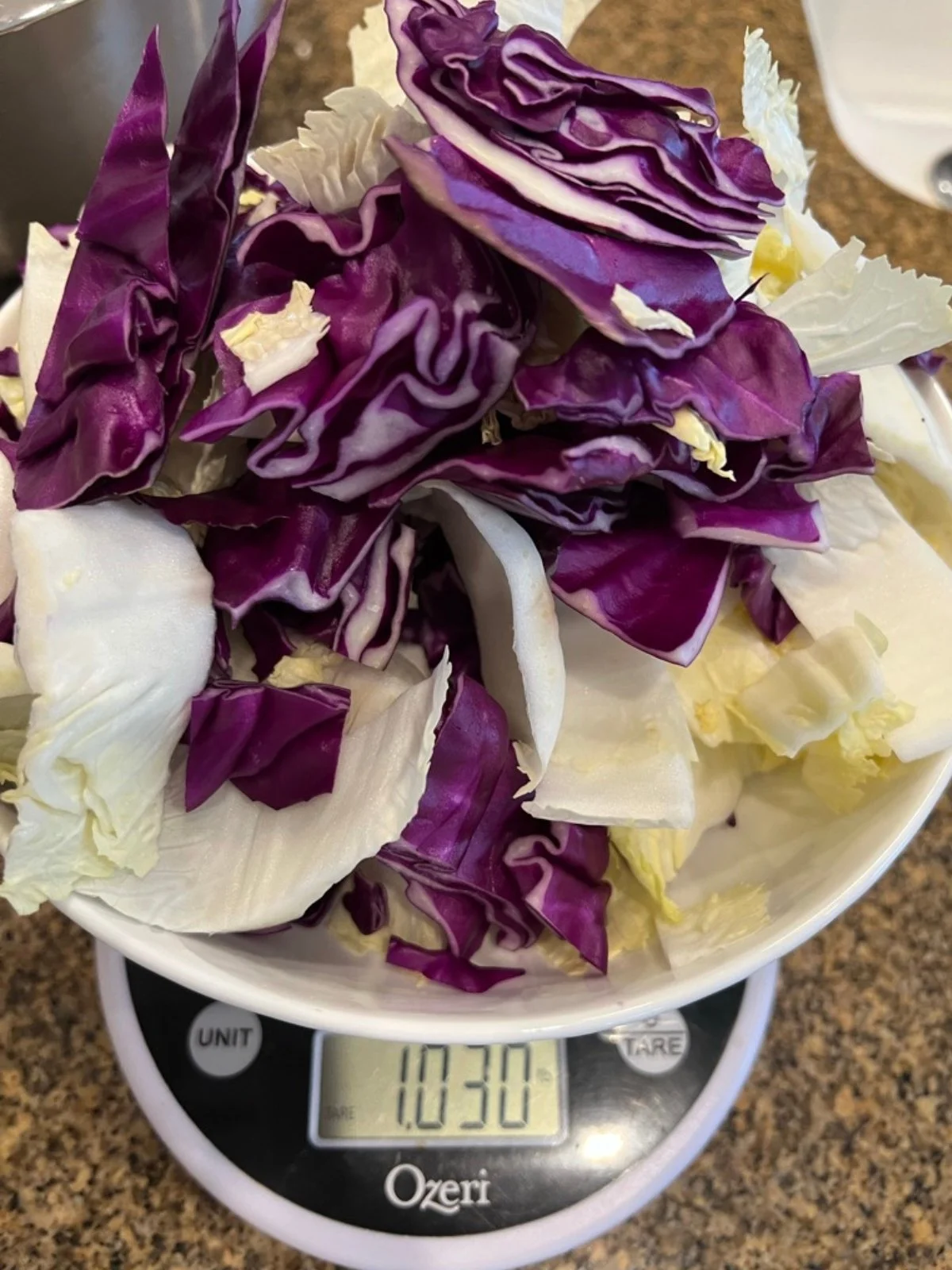
A pound of spinach looks enormous. A pound of cabbage doesn’t. A pound of cauliflower looks different again.
Trying to measure these foods by cups, or simply by how full the blender is, can be surprisingly misleading.
I put a bowl or my blender container on the scale, press tare to zero it out, and add my greens and cruciferous vegetables until I reach 16 ounces for a full batch.
If I’m making half a smoothie, I use about 8 ounces.
Done.
What Does “75% Greens and 25% Fruit” Really Mean?
If you have watched Dr. Goldner make smoothies, you may have heard her describe filling the blender approximately 75% full with greens and then adding fruit to the remaining 25%.
That is a wonderfully simple visual when you are using leafy greens.
In one of her demonstrations, she explains that a full one-pound container of Power Greens can occupy roughly that much blender space. She has also described approximately a one-to-one ratio of vegetables to fruit by weight, noting that the proportions look very different by volume because leafy greens are so light and bulky.
But here is where people can get confused.
The 75% visual does not translate neatly to dense cruciferous vegetables. One pound of chopped cauliflower takes up far less space than one pound of spinach.
So does cabbage.
So does broccoli.
So do Brussels sprouts.
If you tried to fill three-quarters of your blender with cauliflower simply because you were following the visual rule, you could end up with much more than a pound.
That is why I prefer to use the kitchen scale.
When using fluffy leafy greens, the 75/25 blender visual can be a helpful shortcut. When using dense cruciferous vegetables—or a mixture of the two—I let my scale tell me when I’ve reached the amount I want.
Which Greens and Cruciferous Vegetables Can You Use?
There is a lot of freedom here.
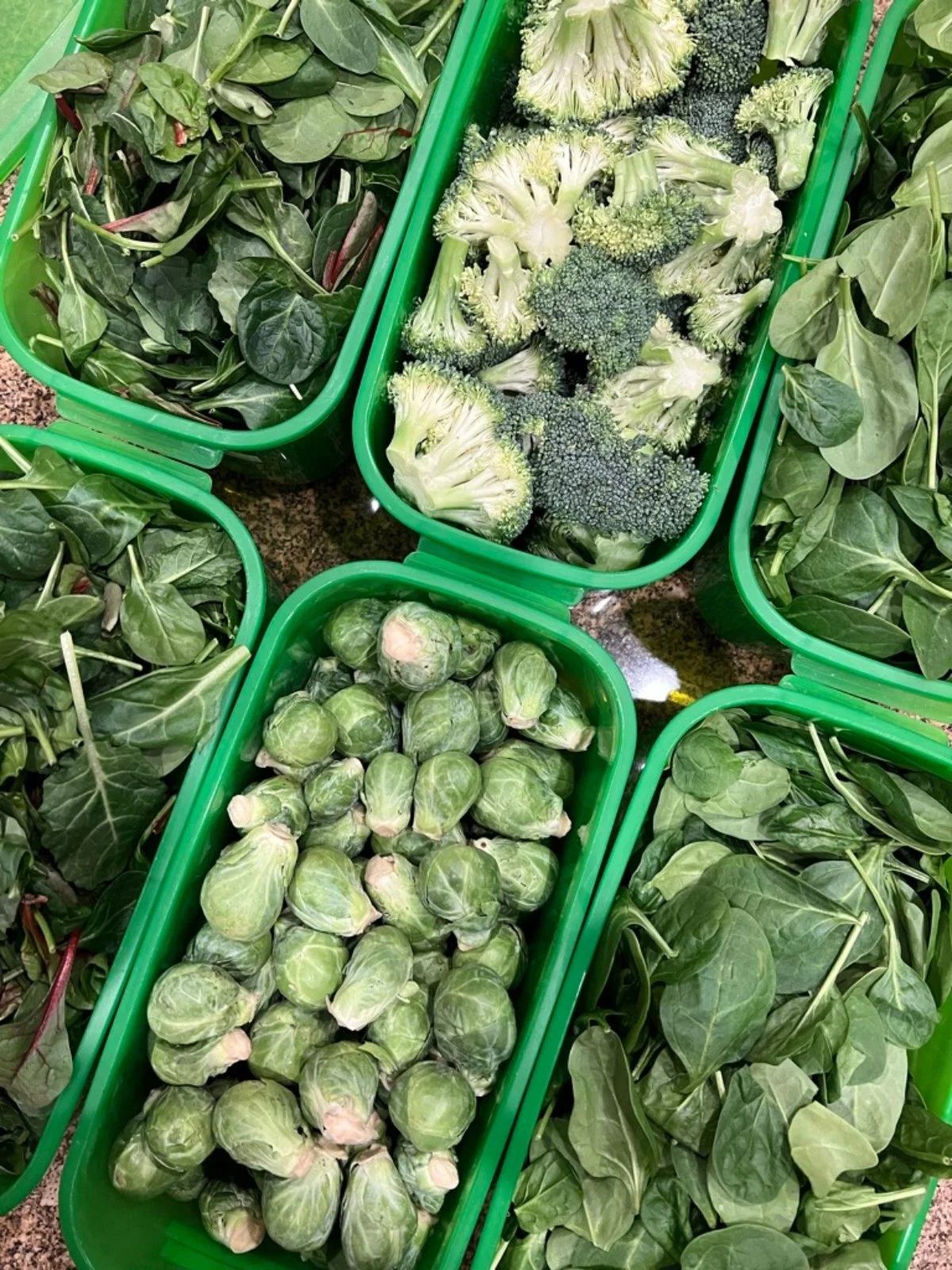
You can use spinach, kale, Swiss chard, collard greens, arugula, bok choy and other dark leafy greens.
You can also use cabbage, broccoli, cauliflower, and Brussels sprouts. Kale, collards, and bok choy are also cruciferous vegetables.
And please don’t be afraid of the cruciferous vegetables!
Dr. Goldner places a strong emphasis on cruciferous vegetables in her nutrition approach. If you’d like to understand why they matter so much, you can read my full guide to cruciferous vegetables and their health benefits.
Broccoli or cabbage in a smoothie may sound a little unusual at first, but once you add ripe fruit, the flavor is usually much milder than people expect.
A small peeled lemon makes an especially big difference. I find that it cuts through the stronger green flavor and gives the whole smoothie a fresh, bright taste.
Fresh ginger is wonderful too, although completely optional.
The Mildest Smoothie I Know
If you are brand new to very green smoothies and want the gentlest introduction possible, this is where I would start:
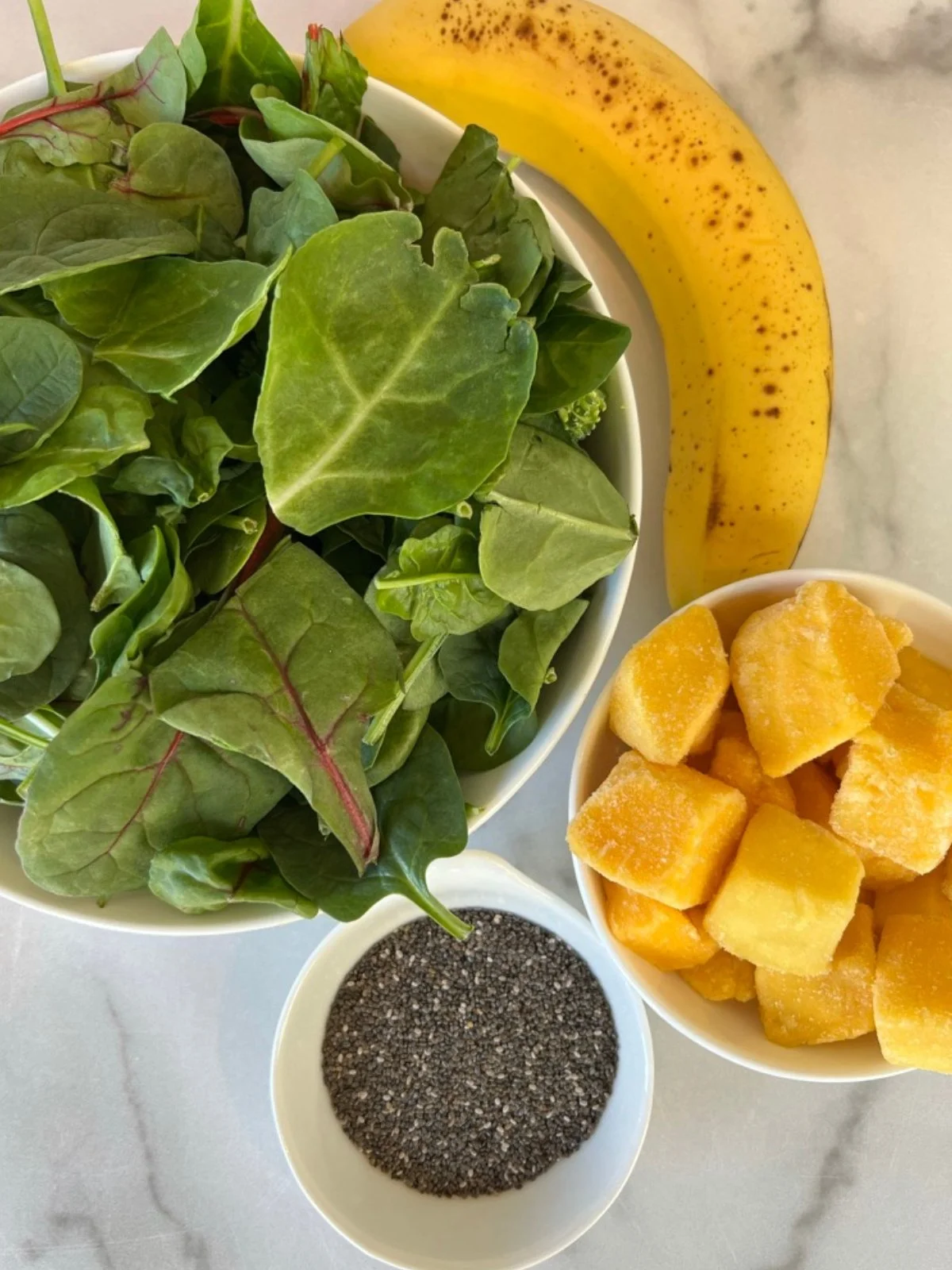
Spinach + mango + a very ripe banana + one small peeled lemon + an optional thumb of fresh ginger.
Spinach is mild. Mango and a properly ripe banana add sweetness. Lemon freshens the whole thing without making it taste like lemonade, and ginger gives it a little extra zing if you enjoy it.
This is the smoothie I’d give someone who is staring suspiciously at the blender and wondering what they’ve gotten themselves into.
You Do Not Need Endless Variety
This is another piece of Dr. Goldner’s advice that can make the whole process feel much easier.
If you discover one combination you genuinely love, you can make that smoothie over and over.
You don't have to keep inventing new smoothie combinations if you've already found one you really love.
If you enjoy experimenting, wonderful. I certainly do.
But if spinach, mango, and banana is the smoothie you wake up happy to drink every morning, consistency is perfectly okay.
Sometimes the easiest healthy habit is the one you stop having to think about.
A Trick When Using Huge Garden Greens
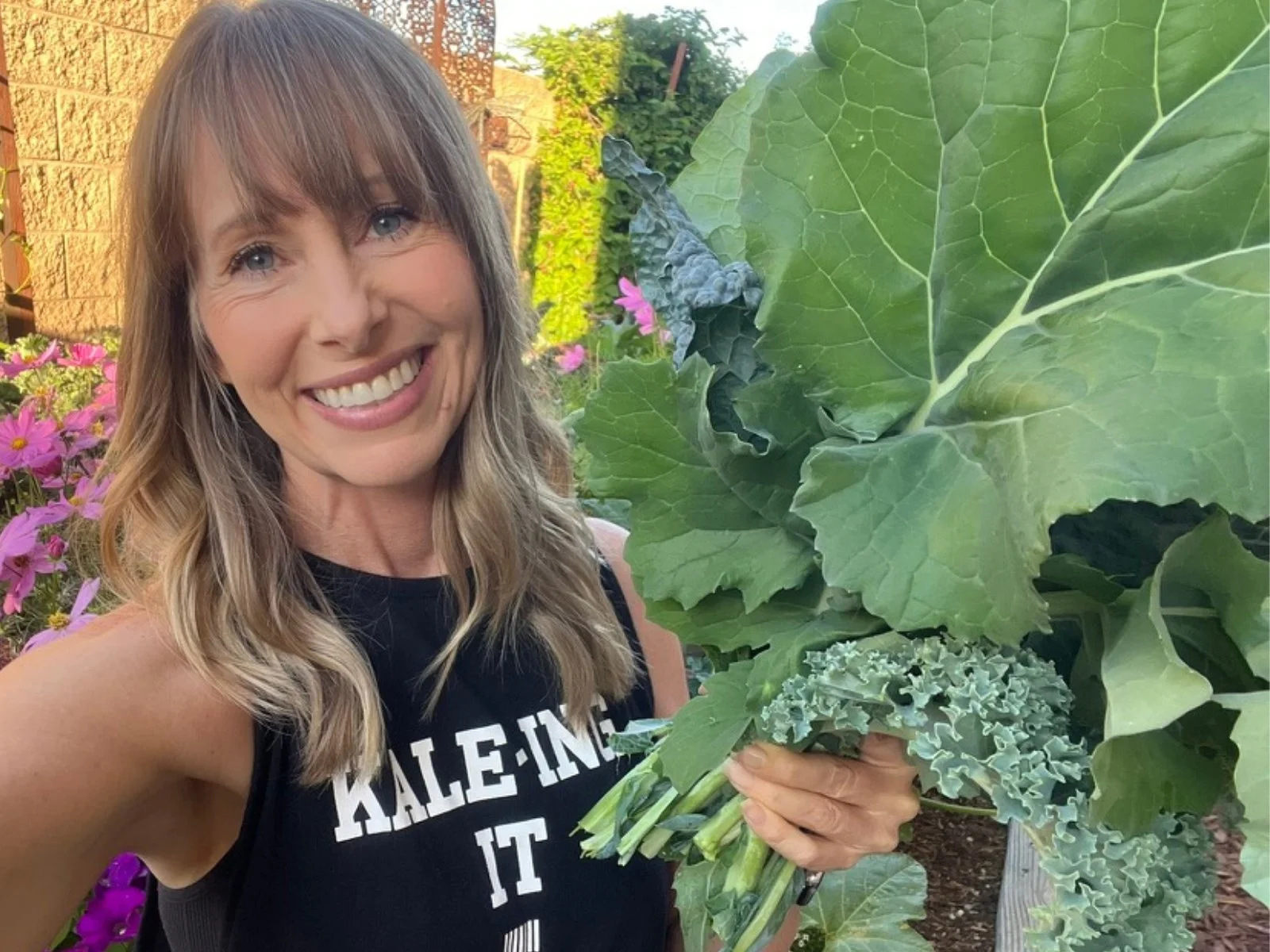
Some of my homegrown kale and collard leaves are enormous, so I chop them smaller, then do a quick blend with water; that way, there is room for the fruit.
If you grow your own greens, you know how huge some of the leaves can get. My kale and collards are often much bulkier than what I buy at the store.
Some of those leaves are enormous!
When I’m making the full one-pound smoothie, I usually chop the greens a little smaller and add them to the blender with some of the water first. Then I blend them briefly, just enough to reduce the volume and make room for the fruit.
After that, I add the rest of the ingredients and blend until smooth.
It’s a simple little step, but it makes fitting all those greens into the blender much easier.
How Much Fruit Should You Use?
If you’re following one of Dr. Goldner’s healing protocols, fruit is generally limited to about 16 ounces for the day. You can use all of that in your smoothie, or less if you prefer.
Dr. Goldner has also discussed reducing fruit further if someone is following a healing protocol and not getting the results they’re hoping for.
If you’re Hyper-Nourishing for general health, the approach is more flexible. The goal is to add more greens, cruciferous vegetables, omega-3-rich foods, and water to your usual diet rather than follow the stricter rules of a healing protocol.
Mango, banana, pineapple, berries, cherries, and citrus can all work beautifully in a Hyper-Nourishing smoothie.
Very ripe bananas are especially helpful because they become sweeter as they ripen and can soften the taste of stronger greens and cruciferous vegetables.
My Banana System
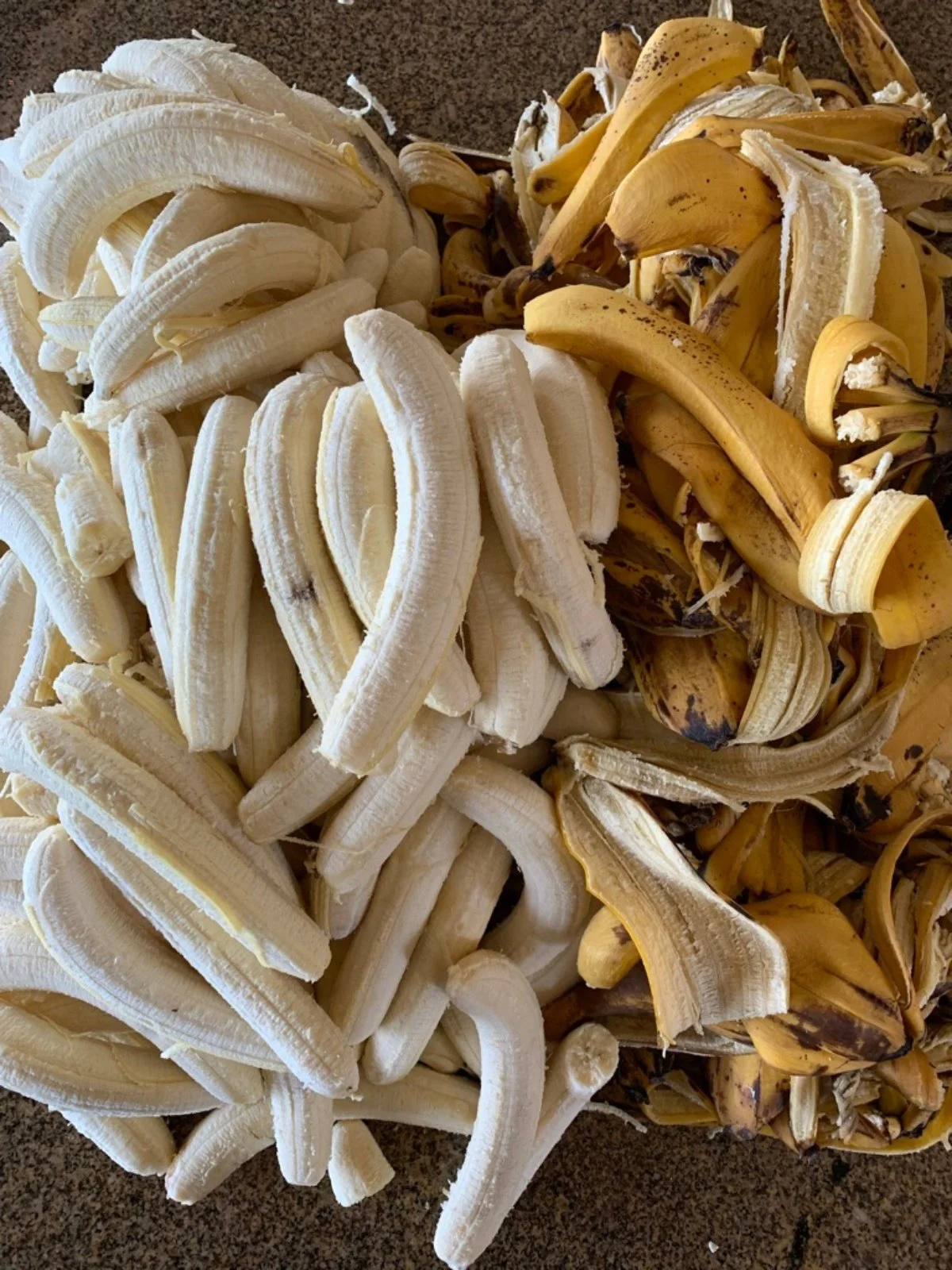
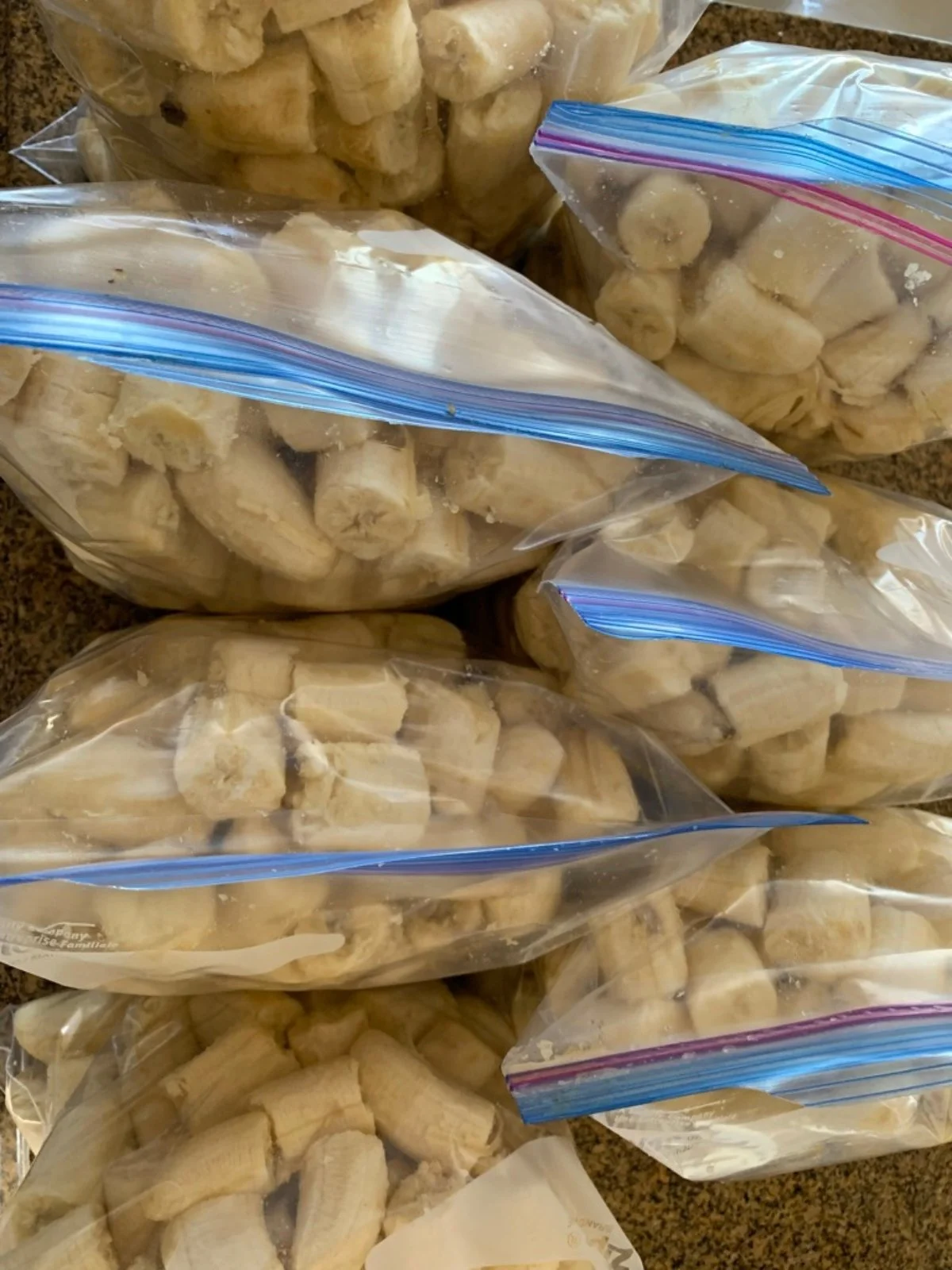
Ripe bananas are such an easy way to make green smoothies taste better, so I like to make sure I always have some ready to go. My mom had taught me the freezing trick years ago, and once I started making smoothies regularly, I finally put it to good use.
Buy a ridiculous number of bananas!
I sometimes buy 8-12 bunches at once.
I let them sit on the counter until they are nice and spotty, peel them, put them into zip-top bags, and freeze them.
Now I almost always have perfectly ripe bananas ready for smoothies, rather than a bunch of hard, yellow-green bananas staring back at me when I need one.
I buy my bananas and most of my frozen smoothie fruit at Costco because I’ve found it considerably less expensive than buying the same quantities at my regular grocery store.
Frozen mango in particular is one of my staples.
Hyper-Nourishing Smoothies on a Budget
Eating a pound of leafy greens every day can become expensive if you rely exclusively on packaged spinach or Power Greens.
In my area, a pound of spinach can sometimes cost as much as $5 for a 1-pound bag, depending on where I shop.
Cabbage is often much less expensive. I can usually buy green or purple cabbage for around $1.15 a pound, and cabbage has the added advantage of keeping far longer in the refrigerator than delicate leafy greens. Greens can start to go bad within 3-4 days, whereas cabbage will easily last 7-10 days.
I also buy large bags of vegetables such as broccoli and Brussels sprouts at Costco.
One of my favorite ways to combine them is 8 ounces of spinach with 8 ounces of cabbage, broccoli or Brussels sprouts.
Because those cruciferous vegetables are dense and heavy, you can reach a pound without needing an entire mountain of expensive spinach.
Add frozen Costco fruit and some of those spotty bananas from the freezer, and the daily smoothie becomes much more budget-friendly.
How Much Water Goes in the Smoothie?
Dr. Goldner recommends roughly 30–40 ounces of water for the full smoothie.
In real life, I generally use around 30 ounces because that is about as much as my blender can comfortably hold once I’ve loaded it with a pound of vegetables and the fruit.
Any more than that and I start flirting with green smoothie on the ceiling or all over the counter!
One really helpful thing to know is that the water in your smoothie counts toward the daily water total.
Dr. Goldner commonly teaches a daily hydration target of about 96–128 ounces, so 30 ounces of smoothie water gets you a good part of the way there.
How Much Flax or Chia?
This is another place where the difference between general Hyper-Nourishing and a healing protocol matters.
For someone who is Hyper-Nourishing to maintain health—essentially adding foods that may be missing from the rest of the diet—Dr. Goldner has described using roughly a handful of flax or chia.
For her healing protocols, she recommends approximately 1/2 cup total flax and/or chia per day.
That is a substantial increase in fiber for someone who isn’t accustomed to eating much of it.
Dr. Goldner recommends working up gradually when needed rather than forcing yourself to tolerate the full amount immediately.
Her current official materials continue to identify flax and chia as key foods in her Hyper-Nourishment approach.
Do You Need to Grind Flax or Chia First?
If you own a high-powered blender such as a Vitamix or Blendtec, you can add the seeds directly to the blender. A powerful blender will pulverize them along with the rest of the smoothie.
If you are using a less powerful blender, I recommend grinding flax first in a small coffee or spice grinder so the outer seed coat breaks open, rather than letting whole flaxseed pass through undigested.
What I Personally Do With My Flax
Confession: I usually do not put flax or chia in my smoothie.
I prefer a thinner smoothie, and both flax and chia can make it quite thick as they absorb liquid.
I still consume my omega-3-rich foods. I simply prefer eating my flax or chia separately.
Sometimes I use flax oil instead because it doesn’t thicken the smoothie at all, although it can become expensive when you are using larger quantities regularly.
The important point is that you can account for the omega-3 portion of the approach without necessarily putting it inside the smoothie itself.
You Don't Have to Drink a Pound of Vegetables at Once
This is important.
If your goal is to consume at least one pound total of greens and cruciferous vegetables for the day, the entire pound does not have to come from one enormous smoothie.
You might make a half-size morning smoothie using approximately 8 ounces of greens or cruciferous vegetables.
Later, you could eat another half pound as a huge salad.
Or broccoli with guacamole.
Or cabbage.
Or whatever way of eating those vegetables sounds good to you.
For some people, one giant smoothie is wonderfully convenient. For others, splitting the vegetables between a smoothie and actual meals feels much more natural.
You don’t have to drink all of your greens. A smoothie is simply one convenient way to enjoy them.
What If You Feel Bloated?
If you suddenly switch from a low-fiber diet to large amounts of greens, cruciferous vegetables, and seeds, your gut may need time to adjust.
Dr. Goldner’s advice when bloating occurs is to break the smoothie into smaller portions and spread them throughout the day.
You might have some in the morning, another portion a few hours later, and gradually increase what you comfortably drink at one sitting.
The same principle applies to increasing flax and chia.
There is a difference between knowing your eventual target and believing you have to reach it immediately.
How to Make the Smoothie
Here is the basic method I use.
First, weigh your greens and/or cruciferous vegetables. Use about 16 ounces for the full batch or about 8 ounces if you are making half.
Add your water. For the full batch, Dr. Goldner recommends approximately 30–40 ounces; I generally use closer to 30.
If your leafy greens are very bulky, quickly blend the greens and water so they collapse and make room.
Then add your fruit—up to roughly the same weight as the vegetables for the full version, or less if that suits your needs.
Add flax or chia if you are consuming it in the smoothie, along with lemon, ginger, or any other protocol-appropriate additions you enjoy.
Blend until smooth.
And taste it.
If you're new to strong greens, start with mild ingredients and ripe fruit. Your palate can change remarkably over time.
Six Smoothie Combinations to Try
For each smoothie below, add water according to the basic formula above—about 30–40 ounces for a full batch, or enough to reach the consistency you like.
All of these combinations follow the same basic Hyper-Nourishing formula; only the vegetable and fruit combinations change.
The Green Food Crush (my favorite)
Use spinach as the greens base with mango and very ripe banana. Add one small peeled lemon and, if you like it, a thumb of ginger.
This is my number-one beginner smoothie.
Berry Green
Use spinach or mixed leafy greens with berries and banana. Lemon is optional but gives it a nice brightness.
Tropical Cruciferous
Use ½ pound cauliflower and ½ pound green cabbage, with mango, pineapple, and banana. Ginger is especially good in this one.
Remember to weigh the cauliflower rather than trying to fill 75% of your blender.
Purple Power
Use purple cabbage with berries or cherries and banana, plus peeled lemon.
I love beets, so I usually add a small one.
The color can be absolutely gorgeous.
Cabbage Mango
Use green, Savoy, or Napa cabbage with mango and ripe banana. I love lemon and ginger here too.
This is one of the most economical ways to make a Hyper-Nourishing smoothie.
Garden Greens
Use whatever looks wonderful in your garden—Swiss chard, kale, collards, or a combination—with banana and mango or berries.
Add lemon and ginger and enjoy the fact that breakfast was growing a few feet from your kitchen.
Smoothies Do Not Have to Be Green
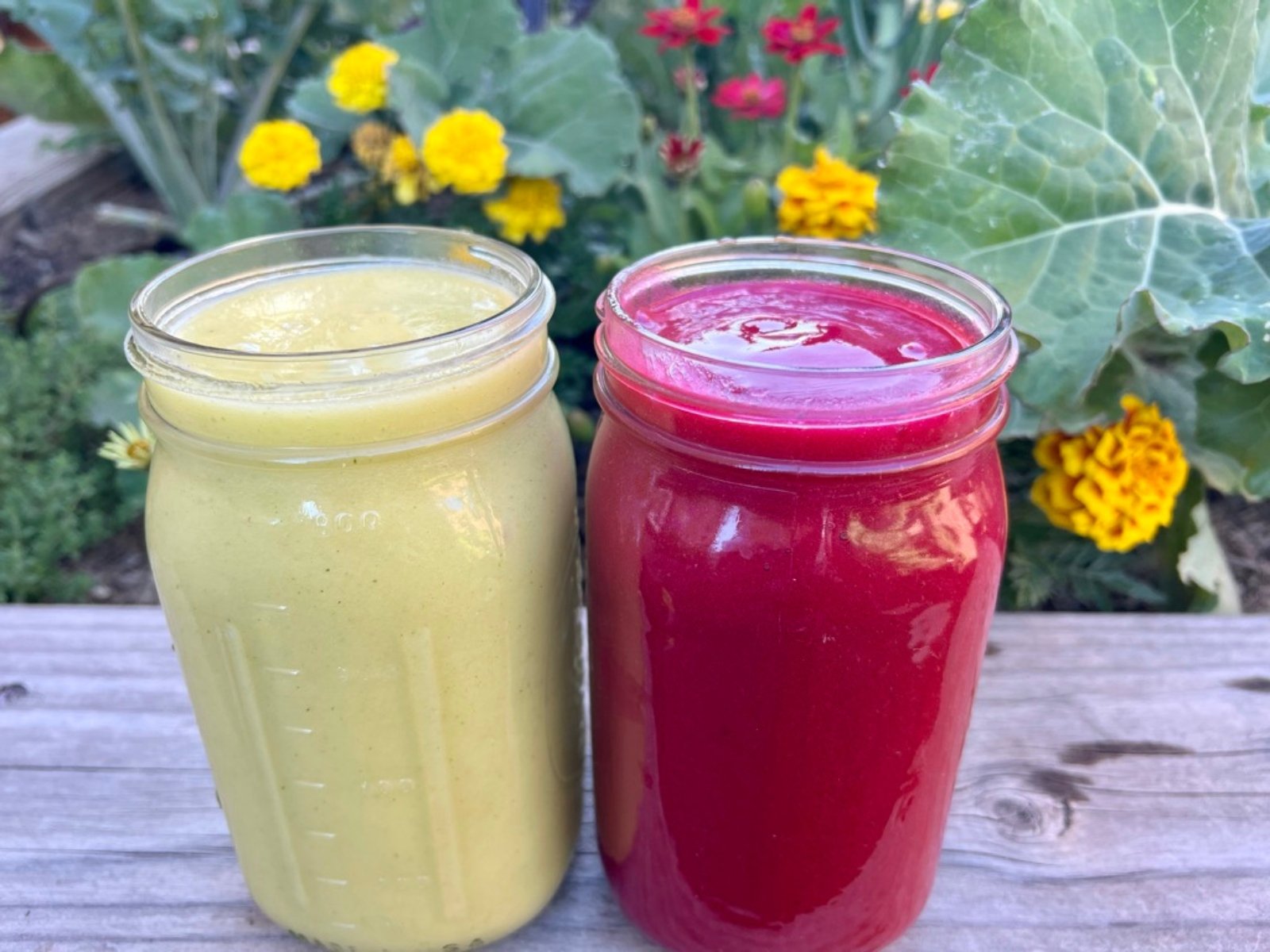
Some of my favorite Hyper-Nourishing smoothies aren't green at all.
Purple cabbage can create a brilliant magenta or violet smoothie.
Berries and cherries can make shades of burgundy and purple.
Cauliflower with tropical fruits can come out pale yellow.
“Green smoothie” really describes the concept better than the final color.
This is also one reason I love photographing them. You never quite know what color you're going to get.
Make the Ritual Fun
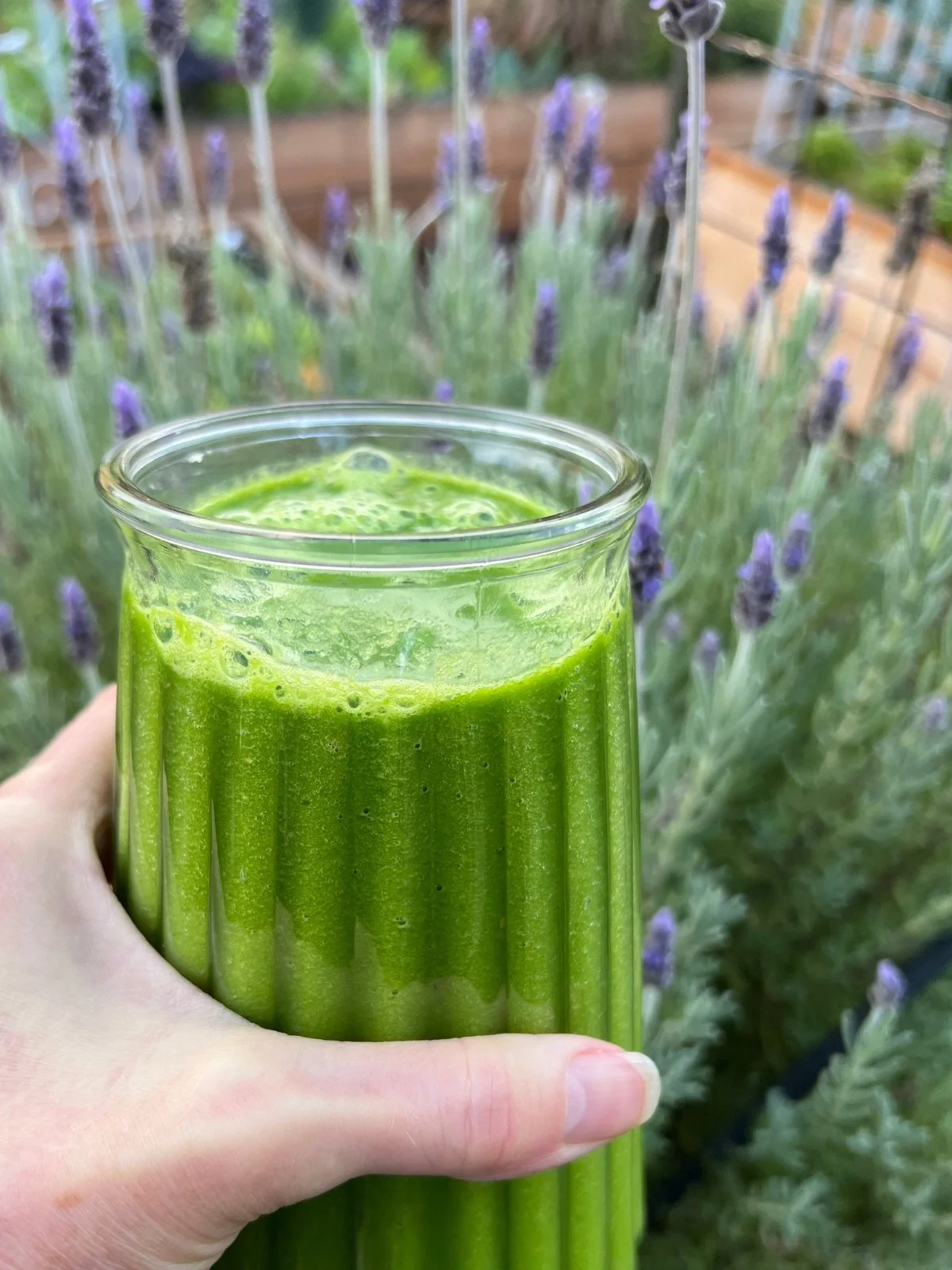
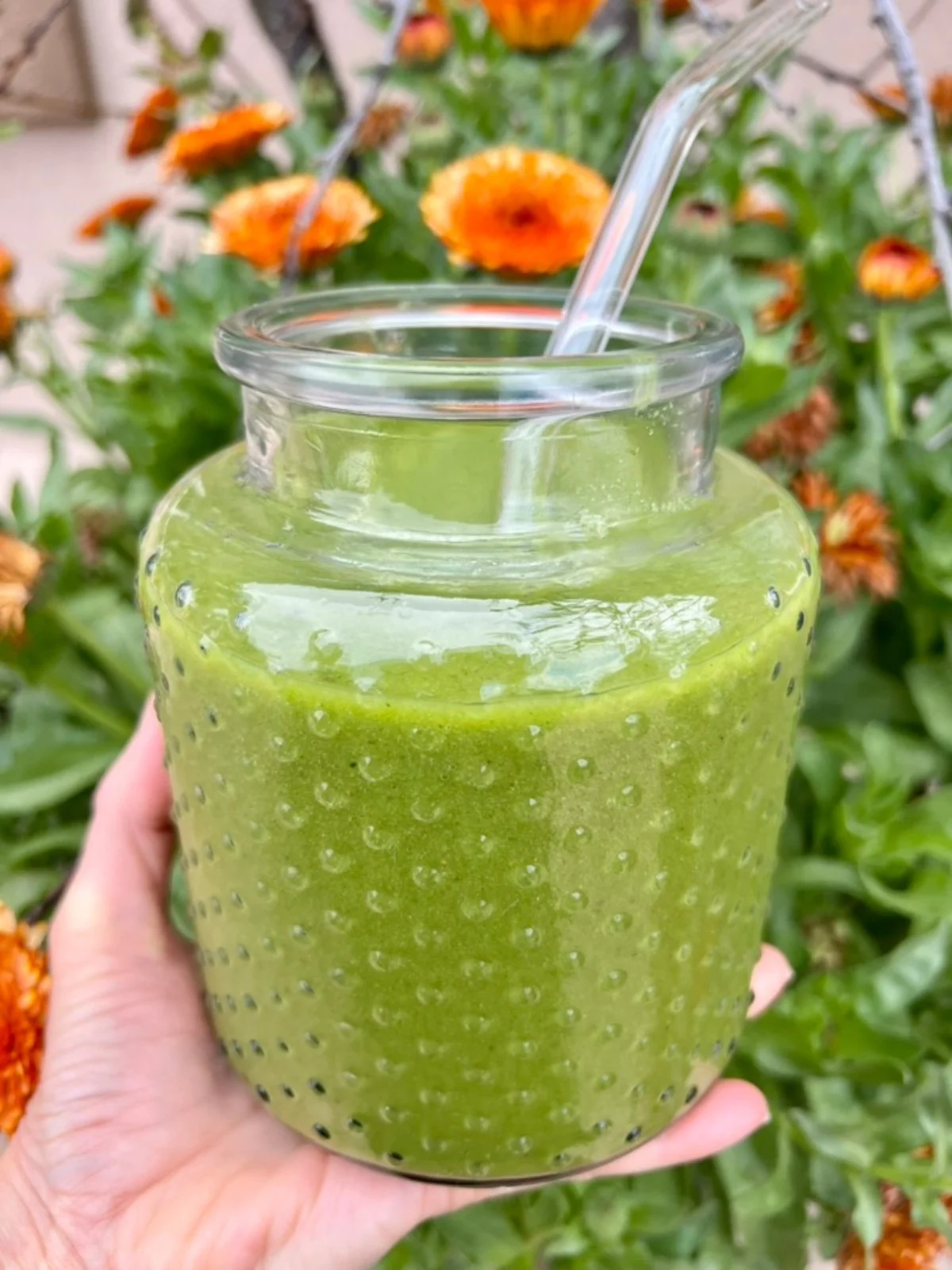
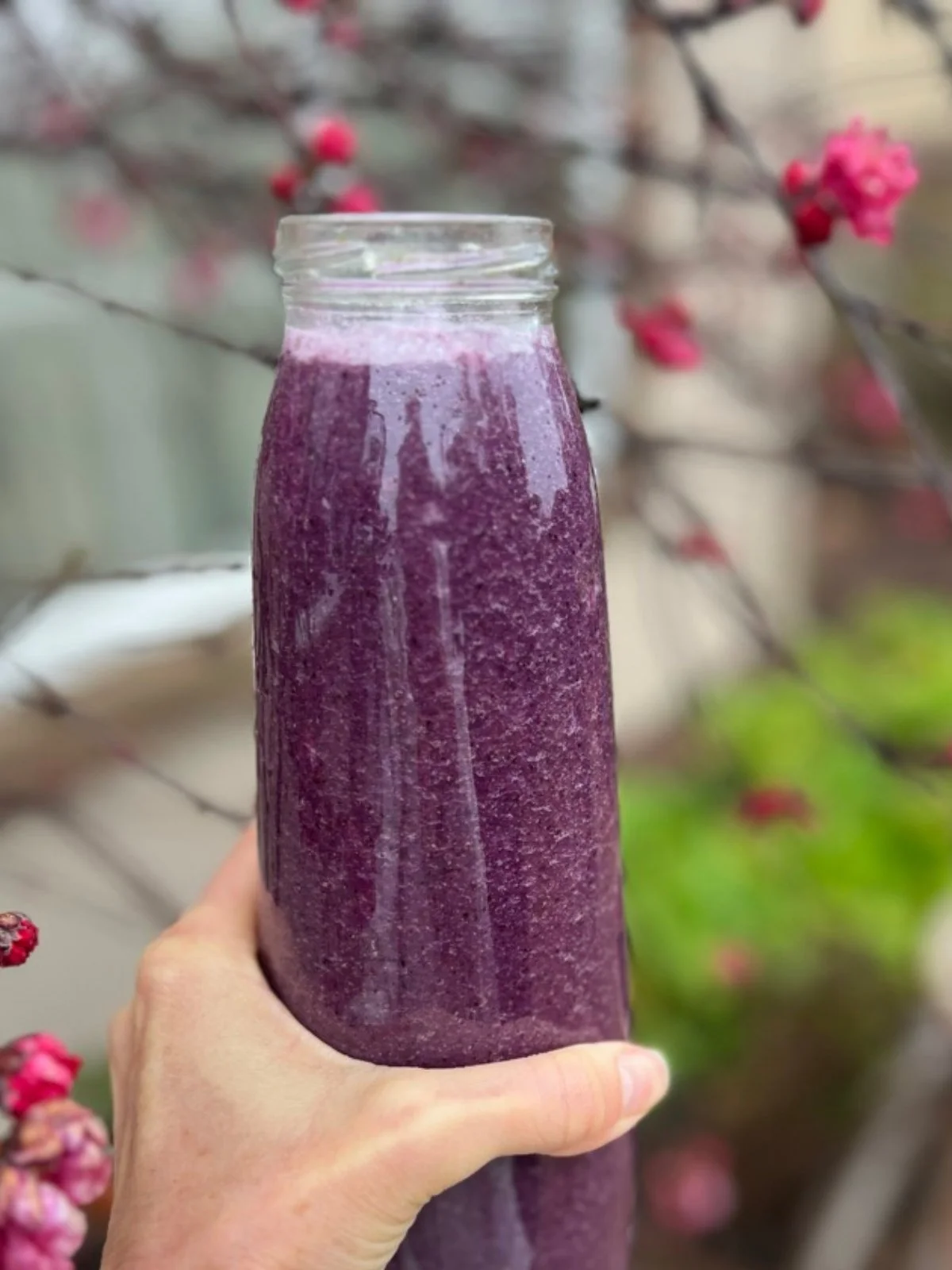
This little thrift-store vase has become one of my favorite smoothie glasses. Healthy habits are more fun when you make them your own.
Somewhere along the way, I developed another smoothie-related hobby:
thrift-store glass hunting.
I love wandering through thrift stores looking for interesting glass containers that might make a fantastic smoothie glass.
Some are old jars. Some are vintage pieces like a glass Planters Peanuts jar! Some were probably intended to be vases.
That somehow makes it even more fun.
I love choosing a pretty glass, walking into my garden, and drinking something colorful surrounded by the very plants that went into it.
Your smoothie doesn't need special glassware, obviously. Many days my smoothie just goes in a mason jar with a sipper lid.
A pretty glass, a glass straw, a spot in the garden…sometimes the little things really do make it more fun.
Make it something you look forward to.
Can You Make a Smoothie Ahead?
Yes.
Dr. Goldner recommends drinking a prepared smoothie within approximately 24 hours, ideally within the same day when possible.
If I am taking mine to work or somewhere else for later, an insulated tumbler works beautifully.
Keep it cold. If it separates while sitting, simply shake or stir it before drinking.
Her official site currently offers a smoothie-making tutorial and downloadable healing smoothie recipes as part of her free resources.
What About Winter?
For those of us in Southern California, winter smoothie weather may be less of an issue. But if you live somewhere colder, a big icy smoothie may sound a lot less appealing in January than it does in July.
Fortunately, there are a few easy ways to make it more comfortable.
Take your frozen fruit out of the freezer 30–60 minutes before blending so it isn’t rock-hard and icy.
Bundle up.
Drink your smoothie somewhere warm.
People in Dr. Goldner’s smoothie community have even mentioned drinking theirs while taking a warm bath!
And yes, I have personally sat in front of a space heater while drinking mine.
The goal is simply to make the habit work for your life, even when the weather isn’t exactly smoothie-friendly.
Hyper-Nourishing vs. a Healing Protocol
This distinction deserves repeating.
Dr. Goldner uses Hyper-Nourishment more broadly than her intensive therapeutic programs.
Someone adding nutrient-rich foods to support general health may use different amounts and have far more flexibility than someone following one of her healing protocols for autoimmune or chronic disease.
That can affect things such as the amount of flax or chia, fruit and the other foods included in the diet.
If you are using Dr. Goldner's work in connection with a medical condition, I recommend learning the specific protocol from her current materials rather than piecing it together from social media posts—including mine.
What Is Dr. Brooke Goldner's Hyper-Nourishing Protocol?
Dr. Brooke Goldner's Goodbye Autoimmune Protocol Explained
Healthy Food vs. Healing Foods
Dr. Goldner's own website specifically states that her nutrition programs are not intended to replace medical care and that medical treatment and medication decisions should remain with a person's treating physician.
A Few Common Questions
Do I have to make a different smoothie every day?
No. Dr. Goldner has said that if you find a combination you love, you can repeat it. Variety is available if you enjoy it, but you don't need to turn smoothie making into a daily recipe-development project.
What is the mildest smoothie?
My vote is spinach, mango and a very ripe banana with a small peeled lemon. Add ginger if you enjoy it.
Can I use broccoli, cauliflower, cabbage or Brussels sprouts?
Absolutely. Don't let the idea scare you. Ripe fruit and lemon can make these much more pleasant than you might imagine. Just remember to weigh dense cruciferous vegetables rather than relying on the 75% blender-volume visual.
Do I have to put the flax or chia in the blender?
I don't. I prefer my smoothie thinner and eat mine separately. What matters is accounting for the appropriate omega-3 component of the approach you're following.
Can I make only half a smoothie?
Yes. Eight ounces of greens/cruciferous vegetables in a smoothie leaves another eight ounces to enjoy later if your goal is one pound for the day.
Does the smoothie water count toward my hydration?
Yes. The water in the smoothie counts toward Dr. Goldner's daily water target.
What if it makes me bloated?
Dr. Goldner recommends dividing the smoothie into smaller portions and spacing them throughout the day while your digestive system adjusts. If needed, increase very high-fiber foods such as flax and chia gradually.
Can I make it the night before?
Yes. Keep it cold and aim to consume it within 24 hours, preferably within the same day when possible.
One Good Thing You Can Do Today
If all of this information feels like a lot, forget the full protocol for a moment.
Buy some spinach.
Get a ripe banana and a bag of frozen mango.
Add a small peeled lemon.
Blend it with water.
Drink it.
That's it.
You don't have to overhaul your entire life before lunch.
I love how much nourishment you can pack into one glass with simple, everyday foods.
Our bodies require nutrients, hydration, and energy every single day, and here is one beautifully simple way to give them more of what they need.
Maybe someday your smoothie will contain a pound of cabbage, and you will drink it happily while sitting in front of a space heater out of a vase you found at Goodwill.
But you don't have to start there.
Start with something delicious.
Let it become easy.
Then build from there.
Taking better care of yourself can be an adventure. And I think there is something worth being grateful for in discovering that one small daily habit can make eating more nutrient-dense plants feel surprisingly simple.
Learn More From Dr. Brooke Goldner
Dr. Goldner is the author of Goodbye Lupus, Goodbye Autoimmune Disease, and her new recipe book called Goodbye Lupus, Hello Delicious, all based on her nutrition approach. Her official website also offers a free smoothie tutorial and healing smoothie recipes.
If you’re interested in following one of her specific healing protocols, I recommend learning it directly from her current books, classes, and official resources so you’re working from the most up-to-date guidance.
Medical Disclaimer
This article is for educational and informational purposes only and is not medical advice. I am sharing my personal experience and my understanding of Dr. Brooke Goldner's nutrition teachings. Nutrition should not be used to discontinue, replace or alter prescribed medical treatment without working with your qualified healthcare professional.